Enjoy the snippets below of this great article and click the link at the bottom to read the full version.
YAMAM is the world’s most elite—and busiest—force of its kind, and its expertise is in high demand in an era when ISIS veterans strike outside their remaining Middle East strongholds and self-radicalized lone wolves emerge to attack Western targets.
YAMAM has devised new methodologies for responding to terrorist incidents and mass shootings, which it is sharing with its counterparts across the globe.
Off and on for a year, I followed N and his team as they traveled, trained, and exchanged tactics with their American, French, and German counterparts on everything from retaking passenger trains to thwarting complex attacks from cadres of suicide bombers and gunmen firing rocket-propelled grenades.
The conventional wisdom for how to deal with fast-moving terrorist incidents has evolved over time, most notably in hostage situations. Since the 1960s and 70s, first responders have sought to establish a physical boundary to “contain” an event, engage the perpetrators in dialogue, draw out negotiations while formulating a rescue plan, then move in with a full team. Similar principles were adapted for reacting to kidnappers, emotionally disturbed individuals, and mass-casualty incidents.
YAMAM goes in heavy, dispatching self-contained squadrons of breachers, snipers, rappellers, bomb techs, dog handlers, and hostage negotiators. Metaphorically speaking, they don’t send an ambulance to stabilize a patient for transport. They send a hospital to ensure survival on scene.
Major O, the 37-year-old who commands YAMAM’s sniper team, explained that one of the unit’s signature skills is getting into the assailant’s mind-set. “We try to learn every terrorist attack everywhere in the world to find out how we can do it better,” he noted. “Our enemies are very professional, too, and in the end they are learning. They try to be better than us.”
Read the full article [HERE].

Monday, October 8, 2018
Sunday, October 7, 2018
Time for Peace Talks With ISIS and Al Qaeda?

With options limited for fighting terrorists, negotiations may be the best remaining alternative.
The United States is prepared to back talks with the Afghan Taliban. It is worth considering whether the same spirit of accommodation—or, more accurately, resignation—could be extended to other groups associated with al Qaeda or even the Islamic State.
Read more from Foreign Policy [here].
Thursday, October 4, 2018
'Fire was being shot all over': 6 officers hurt, 1 dead in South Carolina shooting
Seven law enforcement officers were shot, one fatally, on Wednesday night during a two-hour standoff in an upscale residential neighborhood in Florence County, South Carolina.
The male suspect, who held children hostage as he fired upon officers from multiple agencies, has yet to be named. The children were unharmed, police said.
...Soon, Florence Police Department officers responded to assist deputies as the suspect remained barricaded inside the home. Three county deputies and four city officers were shot before the suspect surrendered after talking with a negotiator, according to local media reports.
Read the full article [HERE].
Wednesday, October 3, 2018
Mission Critical: NJDOC Critical Incident Negotiation Team Continuously Hones Its Skills

It was July 4 weekend when members of the New Jersey Department of Corrections’ Critical Incident Negotiation Team (CINT) received word that an armed officer had barricaded himself in a three-story tower located on the grounds of a prison.
It was their job to find a way to peacefully end the crisis, which unfolded several years ago.
“They were able to bring the individual’s emotions to the point where he was able to be rational,” said Lowery, who works at Albert C. Wagner Youth Correctional Facility.Read more from Corrections.com [HERE].
Sunday, July 22, 2018
Armed standoff at LA Trader Joe's ends with one store employee dead, wounded suspect in custody
Wow! Bravo to this #TraderJoes crew member Sean. He heard the shots, barricaded himself and some co-workers upstairs, grabbed the window ladder and helped many of his co-workers get out. You can see him in the picture below. #SilverLake @NBCLA pic.twitter.com/2co6JqVhCY— Kenny Holmes (@KHOLMESlive) July 22, 2018
A Trader Joe's employee is dead and a wounded suspect is in custody after a standoff in Los Angeles stretched through several tense hours Saturday before the suspect surrendered.
About 40 people were inside the grocery store on Hyperion Avenue, in LA's Silver Lake neighborhood, when an armed man ran in, according to police. He had crashed the car he was driving nearby after firing multiple rounds at officers pursuing him, police said.
The man was running from police after a shooting in which an elderly woman and a young woman were victims, LAPD Officer Mike Lopez told CNN. Their conditions were not given.
Police said the older woman was the suspect's grandmother, and it was the grandmother's car he was driving when he wrecked near the Trader Joe's.
Read more and watch the video from CNN [HERE].
Wednesday, July 18, 2018
Calgary Police/RCMP Negotiation Seminar

24th Annual Calgary Negotiation Seminar
Calgary Police Service / Royal Canadian Mounted Police
Calgary, Alberta Canada
September 26 to September 28, 2018
This jointly sponsored seminar by the Calgary Police Service and the Southern Alberta District of the Royal Canadian Mounted Police, seeks to expand the knowledge and expertise of negotiators, incident commanders and tactical officers.
Open to police officers, corrections officers and selected mental health professionals who actively work with negotiators, these sessions aim to share new ideas, methods and experiences in an open forum.
Take a look at the agenda for this great event [HERE].
Friday, July 13, 2018
The Science of Stress and How Our Emotions Affect Our Susceptibility to Burnout and Disease

(BrainPickings)- In the immeasurably revelatory The Balance Within: The Science Connecting Health and Emotions (public library), Sternberg examines the interplay of our emotions and our physical health, mediated by that seemingly nebulous yet, it turns out, remarkably concrete experience called stress.
...Memory, it turns out, is one of the major factors mediating the dialogue between sensation and emotional experience. Our memories of past experience become encoded into triggers that act as switchers on the rail of psychoemotional response, directing the incoming train of present experience in the direction of one emotional destination or another.
Mood is not homogeneous like cream soup. It is more like Swiss cheese, filled with holes. The triggers are highly specific, tripped by sudden trails of memory: a faint fragrance, a few bars of a tune, a vague silhouette that tapped into a sad memory buried deep, but not completely erased.Read more [HERE].
Wednesday, July 11, 2018
Gaining Empathy and Insight With Anxiety

Read more [HERE].
Tuesday, July 10, 2018
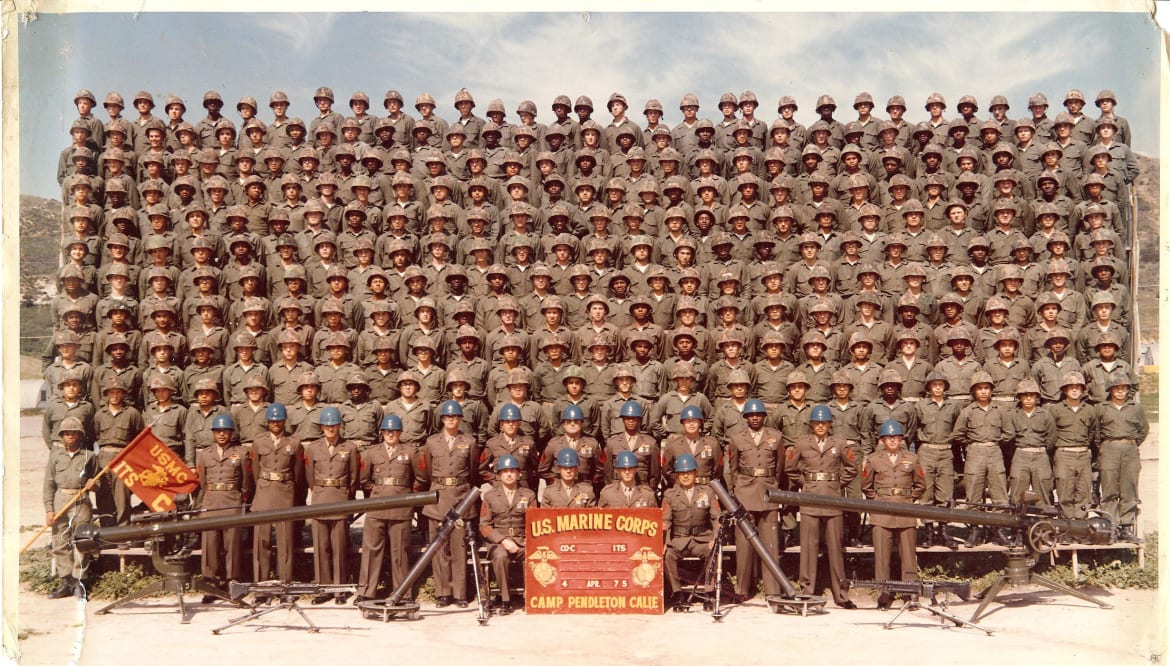
How The Marines Pulled Off An Incredible Hostage Rescue

(TheDailyBeast.com)- ...The Khmer Rouge soldiers kept the merchant sailors on board but took the nonessential crew off the ship. The Khmer Rouge commander, Sa Mean, ordered the ship to the Cambodian port of Kompong Som. As the ship steamed through the Gulf of Thailand, American military aircraft—alerted by the SOS—harassed the Mayaguez by buzzing the ship, strafing the sea in front of its bow, and dropping tear gas on the deck. The harassment forced the Mayaguez to anchor off the coast of Koh Tang, a gulf island northeast of Poulo Wai.
...“A helicopter was shot down on East Beach.”
Tuitele’s mind raced. All he wanted to do was get down there and help his men. He started to go over his battle drills. It was going to be a hot landing zone.
Read more [HERE]. (Note: the full version is behind a paywall)
Sunday, July 8, 2018
Woman Climbs Statue of Liberty, Elite NYPD Officers Negotiate and Help Her Get Down

Authorities had tried to talk the woman down but she refused to leave. For nearly three hours, she crossed the base of the statue...
"At first, she wasn't friendly with us, but we took the time to get a rapport with her so that took a while," said Glacken.
"She just kind of mentioned the kids in Texas. I guess the whole debate that's going on about that. In the beginning, she threatened to push us off, push the ladder off, but we stayed with her," Glacken added.
"She just kind of mentioned the kids in Texas. I guess the whole debate that's going on about that. In the beginning, she threatened to push us off, push the ladder off, but we stayed with her," Glacken added.

Thursday, June 28, 2018
Irish Police Negotiators involved in 86 tense negotiation stand-offs last year

EXPERT cops were involved in 86 tense stand-offs with people threatening to take hostages and others vowing to take their own lives in 2017.
A special Irish Sun on Sunday investigation on the work of the Garda National Negotiation Unit shows how officers are dealing with almost two ‘crisis incidents’ per week.
...The majority of calls they receive relate to people attempting to take their own lives. But they have also been involved in incidents after criminals have gone on the rampage or barricaded themselves into properties.
Read more [HERE].
Friday, June 8, 2018
Trauma Of Violence Brings Mental Illness

The following can help those working in crisis situations generate empathy for those people they are trying to help that are in a crisis, experiencing trauma and suffering from a mental illness:
I’ve treated individuals who experienced gun violence. They have brutal nightmares and can experience debilitating shock when someone is behind them in the grocery store. Their lives are wrecked by fear. Neurobiological processes imprint memories of the event, and can be triggered at any given moment. I’ve also treated mothers who have lost children. They’ve been hospitalized for thoughts of suicide and severe symptoms of distress and depression. Their lives hold pain and darkness, even 30 or more years later. They often lose motivation to work, and struggle especially in the days surrounding the anniversary of the tragedy.
The problem is that mental illness affects individuals and families. It affects entire communities...
Read more from Luming Li/the Hartford Courant [HERE].
Wednesday, June 6, 2018
Risk of being a crime victim goes up with mental illness diagnosis
(Reuters Health) - Having a mental illness makes people more vulnerable to becoming the victims of a crime, a recent analysis suggests.
Based on nationwide data from more than 2 million people in Denmark, researchers found that in the 10 years following a diagnosis with any psychiatric disorder, a man’s risk of being the victim of a crime that was reported to police rose by 50 percent. For women, the risk went up by 64 percent compared to women without mental illnesses.
The greatest increased danger was from violent crime: men’s risk of being a victim rose by 76 percent while women’s went up nearly three-fold, the study team reports in JAMA Psychiatry.
“This study confirms what we’ve known for a long time, which is that people with mental illness are more likely to be victims, not perpetrators of crime. Perpetrators choose victims who seem powerless and helpless,” said Dr. Renee Binder, a professor of psychiatry and director of the Psychiatry and the Law program at the University of California, San Francisco Medical School.
Read the full article [HERE].
Tuesday, June 5, 2018
Mental Disorder in Terrorism, Mass Murder and Violence: Moving Away From Pathologising Grievance

The following is an excerpt from the latest CREST Security Review (Issue 8). You'll see how from the snippet below, the material is directly applicable to those working in crisis situations be it as as law enforcement negotiator, crisis intervention specialist, crisis counselor or another type of role.
The assumption of mental disorder causing violent behaviour has instinctive appeal: It offers a clear-cut and simple explanation of why people choose violence. By attributing Paddock’s record act of violence to mental disorder (as understood by the general public), as opposed to a political aim, it fits with the popular image of a crazed killer.
The case of Paddock is not isolated. Media coverage of many recent mass killings has shown the desire to attribute motivation to mental illness. The cases of Dylann Roof, Esteban SantiagoRuiz, Michel Zehaf-Bibeau, Mohamed Lahouaiej-Bouhlel, and Omar Mateen have all attracted wide media coverage, mainly because of the discussion surrounding how their actions should be labelled due to their suspected mental disorder.
...Just because a factor (such as mental disorder) is present in a case of mass violence, does not make it causal. Nor is it always facilitative. It may be completely irrelevant. We must be comfortable with this complexity; understand that where mental health problems are present, they are usually one of several aspects in a risk profile; and by doing so, not stigmatising the vast majority of people that suffer from mental health problems while remaining non-violent, non-radicalised, and in need of care.
Read more from Emily Corner [HERE].
Subscribe to:
Posts (Atom)