Friday, January 18, 2019

Offering hot chocolate behind an armored car: How Washtenaw’s crisis negotiators spent a busy year

ANN ARBOR, MI - Semi-automatic weapons and an armored truck surrounded the home.
They’d been there for hours, ever since a woman climbed out of a window that morning, fearful of her roommate. He was threatening to blow the place up, police said, and he wouldn’t come outside.
Then, he did. For a cigarette.
The crisis negotiators on scene had offered it, officials say.
It’s one of a number of tactics at the disposal of the Washtenaw Crisis Negotiation Team, in concert with Washtenaw Metro SWAT, to end crises such as that Oct. 30 barricade situation in Ypsilanti Township, said Washtenaw County Sheriff’s Lt. Nancy Hansen, negotiation team commander.
Weeks later, via megaphone, negotiators offered a barricaded man hot chocolate.
"Hey, it works," said Hansen, laughing briefly as she recalled some teasing the move incited. "So whatever works, as long as nobody gets hurt."
Read the full story about the busy year the team had at MLive.com [HERE]. 

Thursday, January 17, 2019

Police negotiator who died on Christmas Eve was struggling with PTSD, family reveal as they launch fundraising appeal


A police negotiator who died on Christmas Eve was struggling with PTSD his family has revealed, as they launch a fundraising campaign in his memory.

Detective Inspector Terry Hopkins, who served with South Wales Police, was a married father of three children.

He had joined the 9/12th Royal Lancers from the age of 16 before joining the force, where he progressed to become a negotiator, his son said.
"I do not want my Dad's death to be in vain, nor do I want the bad to be remembered. Only the positive. So, can you help me, help them that are suffering?... 
My Dad was a good man who affected everyone he met in a positive way."
Read more and find out how you can support them [HERE].  

Did you know more police officers in the U.S. died by suicide than by being killed in the line of duty in 2018? Negotiators (and all law enforcement), you do a great job keeping the public safe, make sure to take care of yourself too. 

You are not alone. It is not hopeless. Help is available and you have options: 


  • In the U.S., you can text BLUE to 741741 (Crisis Text Line is free, 24/7, and confidential).
  • Call the national hotline at 800.273.TALK (8255)
  • Cop Line: 800.267.5463

Wednesday, January 16, 2019

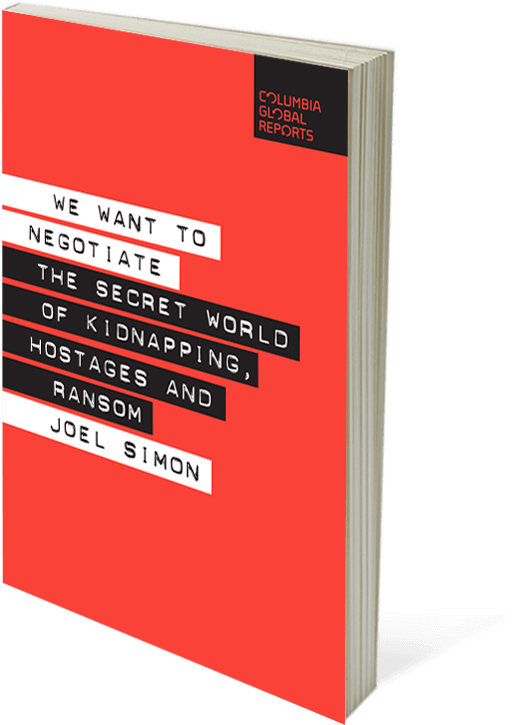
We Want To Negotiate The Secret World of Kidnapping, Hostages, and Ransom

Starting in late 2012, Westerners working in Syria -- journalists and aid workers -- began disappearing without a trace. A year later the world learned they had been taken hostage by the Islamic State. Throughout 2014, all the Europeans came home, first the Spanish, then the French, then an Italian, a German, and a Dane. In August, 2014 the Islamic State began executing the Americans -- including journalists James Foley and Steven Sotloff, followed by the British hostages.
Joel Simon, who in nearly two decades at the Committee to Protect Journalists has worked on dozens of hostages cases, delves into the heated hostage policy debate. The Europeans paid millions of dollars to a terrorist group to free their hostages. The US and the UK refused to do so, arguing that any ransom would be used to fuel terrorism and would make the crime more attractive, increasing the risk to their citizens. We Want to Negotiate is an exploration of the ethical, legal, and strategic considerations of a bedeviling question: Should governments pay ransom to terrorists?
Read more and purchase the book [HERE]. 

Tuesday, January 15, 2019

LPD Crisis Negotiation Team's skills highlighted after suicide attempt on flyover

LUBBOCK, TX - Monday morning, police helped a suicidal person get to a hospital safely after he stood on the ledge of a freeway overnight. Thankfully, that man is okay now after the LPD Crisis Negotiation Team intervened and spent 7 hours talking the man off the ledge. This incident highlights the importance of Lubbock Police negotiators during an emergency. 
"We want to make sure that every event ends peacefully and all subjects are safe no matter what the situation is," said LPD crisis hostage negotiator, Keith Anguish. 
Read more and watch the video from EverythingLubbock.com [HERE]. 

Monday, January 14, 2019

Hostage Negotiation Competition simulates stress, challenges faced by law enforcement

More than 300 law enforcement officers will converge on Texas State University January 14-17 for the 29th Annual Hostage Negotiation Training and Competition.


Newswise — More than 300 law enforcement officers will converge on Texas State University January 14-17 for the 29th Annual Hostage Negotiation Training and Competition.
The hostage negotiator's skill set may not be well-known to the general public, but is essential to ensure public safety. After nearly three decades, the program's reputation is second-to-none, and provides critical training to police departments both national and international. Approximately 30 teams will participate in 2019, with municipal and state law enforcement units coming in from across the U.S., including representatives from New England, California, Oregon, Oklahoma, Ohio and Florida, said Wayman Mullins, a professor in the Department of Criminal Justice and an expert in hostage and crisis negotiations and terrorism. International teams from Canada and Singapore will also participate.
Monday and Tuesday are dedicated to classroom sessions and seminars. Wednesday and Thursday will see the teams conducting mock hostage negotiation exercises, where they'll be graded by top experts in the field.
"Negotiators save lives," Mullins said. "They come here for the training. The better trained they are, the better they do their jobs.
"If you look at the national data, once negotiators respond to a critical incident, their success rate is about 97-98 percent," he said. "What that means is that once we start talking, innocent people don't get hurt or killed. Police officers don't get hurt or killed. The bad guy doesn't get hurt or killed. That's all the justification you need for making these negotiators better at what they do."
Violent hostage situations as depicted in television and movies are a relatively rare occurrence, but negotiators deal regularly with other scenarios demanding their skill set, Mullins explained. Barricades situations happen when, for instance, police attempt to serve a warrant and the intended recipient blocks the door and threatens to shoot anyone who enters. Other times, domestic conflict can escalate to a person taking family members hostage. High-risk suicides are another instance where negotiators become involved with the goal of preserving life.
Law enforcement teams will conducting mock hostage negotiation exercises on Wednesday and Thursday. The teams work in one room, with university faculty playing the role of antagonists in another.
“They’ll be graded on how they negotiate with the hostage takers,” explained Mullins. “This is a role-playing scenario that tries to mimic real life as much as possible.”
The chosen scenario unfolds during the back-and-forth communication between the two groups, with some of the top experts in the field evaluating the teams' performances. All participants receive a standardized evaluation with thorough feedback.
When not participating in the competition, teams are able to observe other teams at work, to learn from the different approaches taken to the same problem.
"Many of the participants will tell you that we add more stress in the competition than they experience in a real life situation, because their peers are watching them here," Mullins said. "The reality is that negotiators can be called on to use these skills at all times, and unexpected times.
"Many of these people have been coming here for more than 20 years," he said. "If we're not helping them, why would they keep come back?"
About Texas State University
Founded in 1899, Texas State University is among the largest universities in Texas with an enrollment of 38,694 students on campuses in San Marcos and Round Rock. Texas State’s 189,000-plus alumni are a powerful force in serving the economic workforce needs of Texas and throughout the world. Designated an Emerging Research University by the State of Texas, Texas State is classified under “Doctoral Universities: Higher Research Activity,” the second-highest designation for research institutions under the Carnegie classification system.

Sunday, January 13, 2019

Monday, January 7, 2019

Hostage negotiation skills provide lessons for the boardroom


Suzanne Williams, a former British police hostage negotiator, scans a room of young professionals gathered for her evening masterclass on how to negotiate at work. “You seem like a lovely group of women but I would be far more in my comfort zone speaking to a load of evil kidnappers,” she says candidly.  


 After three decades as a police officer at Scotland Yard, latterly becoming the first ever female head of the force’s hostage crisis unit, Ms Williams is still adjusting to civilian life. In the police force she specialised in kidnappings, sieges, domestic barricades, suicide prevention and what she calls “crimes gone wrong”, such as bank robberies. 
“You need to be well-prepared, whether you’re talking to some terrorists on Iraq or going into a big meeting.”
Read more from FT.com [HERE]. 

Friday, January 4, 2019

A Smarter Way to Recover Hostages

The U.S. strategy of refusing to negotiate with terrorist kidnappers endangers American lives for no good reason

Should governments ever pay ransom to terrorists who take hostages? The question divides experts and politicians. Spain and Italy have a reputation for being willing to pay whatever it takes to bring their citizens home, while the U.K. and the U.S. don’t pay and in some cases don’t even negotiate. As a result, many British and American hostages have been killed by their captors. In 2014, for instance, ISIS murdered its American and British hostages—including the journalists Jim Foley and Steven Sotloff—while cutting a deal for its European captives.
In order to keep ransom payments down, governments that choose to pay should hide their involvement from the hostage-takers...
The no-concessions countries ask their citizens to make this sacrifice because, they believe, to do otherwise would encourage more kidnapping and funnel resources to terrorists that would be used to finance future attacks. And it is true that, if no one ever paid a ransom for a hostage, the economic logic of the crime would be undermined.
But in the real world, that will never happen.

Read more via Joel Simon/WSJ [HERE]. 

Tuesday, January 1, 2019

Ex-NYPD hostage negotiator to bring conflict management advice to Sussex


“What I do is I offer conflict management training. Hostage negotiation or critical incident management or crisis invention, these are extreme examples. But what they involve are active listening skills, rapport-building,” Shanahan said.

During his time in the Big Apple, Shanahan served as a hostage negotiator and senior instructor. In total, he taught over 100,000 different police officers. Since retiring after over 36 years with the NYPD, Shanahan has started Keisatsu Dojo, an LLC that focuses primarily on providing conflict management courses.

Read more from JSONLINE [HERE]. 

Thursday, December 6, 2018

December Newsletter


Crisis Negotiation Newsletter
December 2018 | www.CrisisNegotiatorBlog.com 

Hello all,

Here's the latest edition of the newsletter. First, happy holidays to everyone. Regardless of what you celebrate (or don't), I'm sending my best to everyone. 

The holidays can also though be a tough time for some - especially law enforcement personnel and others working in crisis incidents. Make sure you look after yourself. You matter. 

Take a moment to check out some resources [HERE]. For example, did you know that the great organization, Crisis Text Line, has set up a special keyword specific for law enforcement officers in a personal crisis? By texting BLUE to 741741 (U.S. only), you'll be connected to a crisis counselor that will only know you are a law enforcement officer somewhere in the U.S. needing a bit of help. It's 24/7, free, and confidential. 


Moving along, there's plenty of information (as usual!) in this month's newsletter. I'll update the calendar next month for 2019 trainings. I'm also working on some interesting research that can also serve as a way for your teams to stay sharp with their skills. I'll share more next month but as a preview, one study includes a terrorism element while another is regarding texting.  

Wednesday, December 5, 2018

Sunday, December 2, 2018

Q&A: Kidnapping and extortion: Just another day at the office

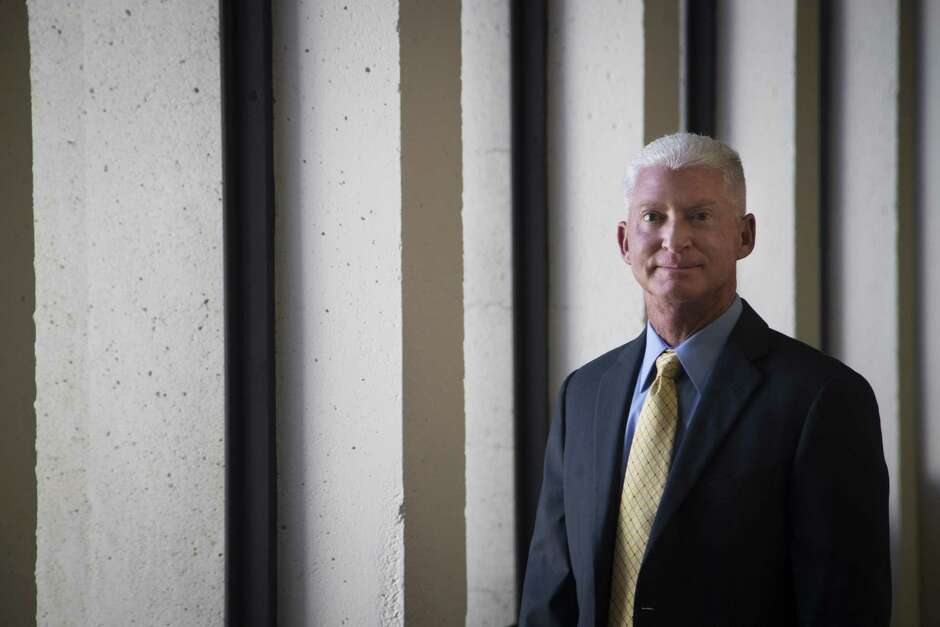
Michael A. Guidry is the founder of Guidry Group, a company established in 1985. The Guidry Group is a security services company. Tuesday, April 17, 2018, in Houston. ( Marie D. De Jesus / Houston Chronicle )

In an ideal world, no one would need the Guidry Group, an international kidnap and ransom, security services and crisis management company. In the actual world, the Guidry Group has resolved more than 70 kidnappings and 40 extortion cases. Its Crisis Management Team tackles an ever-growing number of global threats and emergencies such as terrorism, state-sponsored violence, cyberattacks and natural disasters.

Q: How did you get involved in kidnap and ransom?
A: My kidnap and ransom training began while I was a state trooper in Texas. I loved negotiating in hostage situations, so I put myself through training, not only in the U.S. but around the world. I continued training while at the international company — and still train today. This helps me stay current with the ways kidnappings and extortions can happen. Methods of payment, items requested for negotiations and more continue to change. My skills have to change with them.
Q: Do you have any special “tricks” to save kidnap victims?

A: Basically, we take over the situation and do the negotiations. I don’t know if I’d call our techniques “tricks.” We try to get into the perpetrators’ minds and determine what they really want. Experience is important, as is learning the “do’s” and “don’ts,” and doing more of the “do’s.” Keeping our clients — not happy, because they won’t be happy — but satisfied, is important.
Read more [HERE]. 

Saturday, December 1, 2018

After a suicide, here’s what happens to the people left behind


Kimfamily2

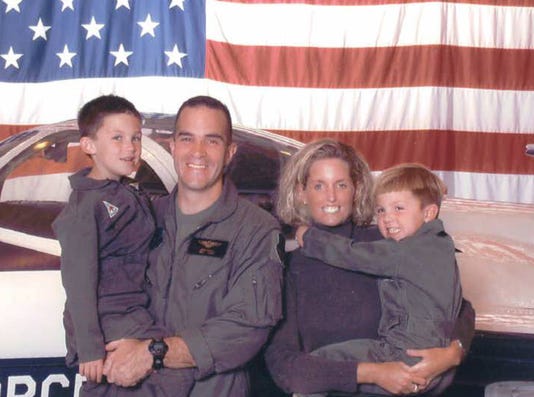
Loss survivors – the close family and friends left behind after a suicide – number six to 32 for each death, according to the Centers for Disease Control and Prevention, meaning that in 2017 alone, as many as 1.5 million people unwillingly became part of this group.

They are forced to cope with the loss of a loved one and navigate uncertain futures, often caring for confused children as they struggle to accept they may never know "why."

"After his death, I cannot say that I was suicidal, but I can remember being in so much emotional pain that I would think, 'I really don’t want to wake up,'" Ruocco said. "Because you can’t figure out how to live your life with this kind of grief."

Read more [HERE]. 

Friday, November 30, 2018

Understanding Psychosis

is s set of symptoms that impacts a person's thoughts and behaviors. A common experience is losing touch with reality. It can affect people of all ages, races, ethnicities, genders and cultures.

Check out this short video to learn more: