Monday, May 23, 2016

HNT Skills: What is Grit?


There are plenty of articles written about the skills of effective crisis hostage negotiators. I should know I have written a bunch myself!

We have read plenty of times the importance of active listening, being calm, verbal/non-verbal communication, slowing things down, and building rapport but what is it that keeps us sharp and competent to continually assist people in the midst of a crisis?

Is it "GRIT"?

Angela Duckworth tells a compelling story why it very well might be grit and how it is what keeps us going forward.


Why Grit?

Her research has shown that long-term success relies more on more on persistence than smarts. Yes, grit - perseverance and passion for what you do - is the key.

How do we cultivate grit?

Eric Barker, who covered the NYPD HNT training [HERE], reviews Angela's research and her book [HERE]. Briefly, it involves:
  • Pursue what interests you
  • Practice, practice, practice
  • Find purpose
  • Have hope
  • Join a gritty group
Again, read more about how Eric describes grit [HERE].


Finally, watch Angela Duckworth's TED talk on Grit below:

Online Course: Terrorism Studies

Here's an interesting online course being offered at the University of Maryland on terrorism, hostage and kidnapping negotiation, and more.

 Read more [HERE]. 

Friday, May 20, 2016

Man With Gun During Standoff Streams It Live on Facebook

Gun-wielding Tampa man who had stopped taking psychiatric medication streams his four hour stand off with swat team on Facebook Live


A man who had been issued a Florida mental health warrant Facebook live-streamed a dramatic four-hour stand off with police, while he hid in his house wielding a gun.
Tampa police were called to Adam Mayo's property on May 9 after his mother became concerned for his safety, a spokesman told Mail Online.

Judy Mayo had alerted police after her son had told her he had stopped taking his psychiatric medication and had sent her photos of a gun. 

Read more [HERE].


Thursday, May 19, 2016

A former FBI hostage negotiator explains why compromise is a bad deal in life and in business

Businessinsider India
The win-win mindset pushed by so many negotiation experts is usually ineffective and often disastrous.

At best, it satisfies neither side. And if you employ it with a counterpart who has a win-lose approach, you're setting yourself up to be swindled.
Of course, as we've noted previously, you need to keep the cooperative, rapport-building, empathetic approach, the kind that creates a dynamic in which deals can be made. But you have to get rid of that naivete.
Because compromise - "splitting the difference" - can lead to terrible outcomes. Compromise is often a "bad deal" and a key theme we'll hit in this chapter is that "no deal is better than a bad deal."
Even in a kidnapping?
Read more [HERE].

Monday, May 2, 2016

I owe my life to those who paid my ransom. But should Ottawa pay ransoms? No


There is an audio file stored on my mom’s computer, labelled “The Bad Call.” It’s a recording of a two-minute call between her and me on Sept. 9, 2009. I had, at that point, been a hostage in Somalia for over a year. My captors — a radicalized criminal group — were pointing guns at my head. I had shackles around my legs and had endured almost daily abuse. It was not uncommon for them to beat me or otherwise push me to the brink of desperation and then immediately dial my mother’s cellphone number.
Why? Because they wanted a ransom.
With the brutal murder of Canadian hostage John Ridsdel in the Philippines this week by terrorist group Abu Sayyaf, the ransom debate is again playing out. Prime Minister Justin Trudeau affirmed the Canadian government’s long-standing ban on paying ransoms for hostages: 
“Paying ransom for Canadians would endanger the lives of every single one of the millions of Canadians who live, work and travel around the globe every single year,” he said.
...The Harper (Canadian) government told my family from the start that it couldn’t, and wouldn’t, negotiate a ransom deal with my captors. But it did say many times that it had a great track record of bringing hostages home safely, without payment.
Read her full article at the National Post [HERE]. 

Wednesday, April 20, 2016

April 2016 Newsletter


April 2016 | Visit the section website HERE
2016 Events

Have a look at our new page that lists all of the Crisis/Hostage organizations and their conferences [HERE]. 


Tuesday, April 19, 2016

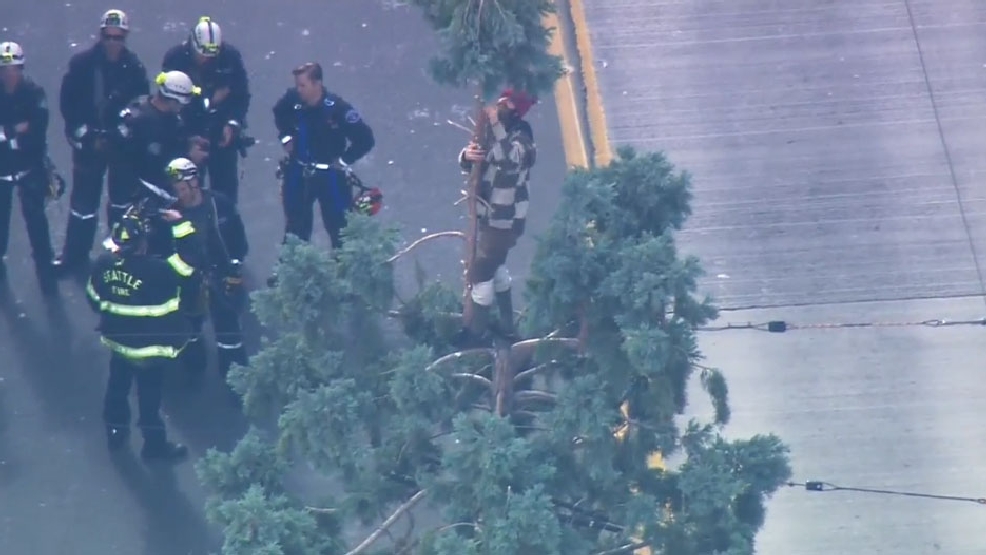
Mental Illness & the #ManInTree Creates Spectacle


A man who remained near the top of an 80-foot tall sequoia tree in downtown Seattle on Wednesday, and has refused hours and hours of police coaxing to come down, has become an Internet curiosity.
 
Seattle police said when authorities arrived at the base of the lofty conifer next to Macy's department store, the man refused to speak with them and threw an apple at medics.

"Issue appears to be between the man and the tree," Seattle police tweeted.

By Tuesday afternoon, police said traffic was being tied up as officials closed nearby roads as a precaution.

"It is quite a spectacle, honestly," police spokesman Patrick Michaud told the Seattle Times.
 
From another report:
 
SEATTLE - Last week's standoff with a man who climbed to the top of downtown Seattle's iconic sequoia tree tied up 70 Seattle police officers, administrators and crisis responders for 25 hours, along with four fire engine companies, battalion command staff and two SWAT teams, according to court documents released Monday.

"This caused an incalculable waste of time and services and arguably the efficacy of local law-enforcement's reaction time to other serious calls for service around the city," court documents say.
In addition, the drama caused nearly $8,000 in damage to the tree itself, according to documents, which also say that a firefighter was nearly struck by a large metal ring the man threw down from the treetop.

And one other article:
 

Miller’s mother, Lisa Gossett, of Wasilla, Alaska, said she had not talked to her son for about five years when a friend called saying he was on the news.

She said she could hardly recognize him.

“There are all these people out there worried about the tree, but they’re not worried about him, the human,” she said. “He’s obviously sick.”

She said Miller had been a “regular” kid with attention deficit disorder until his late teens or early 20s, when he came up to visit her in Alaska and she noticed that something was “off.”

When she straightened his room, she noticed he had knives stashed under a pillow. He warned her there was an evil “presence” in the house and while they were out to eat he insisted “everybody” was looking at him.

“I did not know it was mental illness at first,” she said during a telephone interview on Monday.


Monday, April 18, 2016

Hostage US Launched


Make sure to check this out all and help spread the news of this new important organization:


HOSTAGE US LAUNCH

We are pleased to announce the launch of Hostage US, the first support and resource centre for American hostages and their families. Hostage UK is a co-founding partner along with the James W Foley Legacy Foundation. Hostage US also receives funding from the Ford Foundation. 
Watch the Hostage US video below to learn more and visit the Hostage US website.
 Hostage UK has been supporting American hostages and their families for a number of years – but unfortunately from a distance. We knew there was a need for a similar support service in the US to the one we have been able to deliver successfully in the UK and further afield for over a decade.
Like Hostage UK, Hostage US provides families with a range of support, including a dedicated team member to walk alongside them every step of the way and access to a range of professional support services, such as legal, financial management, health and counseling. 
Help us to spread the word on Facebook, Twitter and LinkedIn – tell your friends and colleagues about Hostage UK and the launch of Hostage US. You can also follow us on Twitter @HostageUK and @HostageUS.


For families going through the horror of a kidnap, Hostage UK provides pastoral care and practical support. Because we are independent, families can be confident that we are there for them without any competing interests. We provide impartial yet knowledgeable information and through our network we can help families to solve the problems they will face along the way. We often work with families who have nowhere else to turn.
Hostage UK also provides education and training for organisations to help them to improve the support they can provide to families, colleagues and returning hostages. We do this through seminars, in-house training sessions, providing expert speakers for events and scenario sessions. We want to use our experience to help organisations provide the level of care, support and assistance that we do.
Hostage UK advocates publicly and privately for the needs of hostages and their families, improving the care and support offered by the government, police, statutory agencies, employers, the health service and a range of other organisations. Hostage UK rarely speaks in the media, apart from to advocate for hostage and family support.
Hostage UK does not engage in operational response to kidnaps. We cannot bring the hostage home, but we can help to make a very stressful experience just a little bit more bearable.
If you are the family member of a hostage or a former hostage and need our support, call our 24/7 local rate helpline on 0845 608 1360 or email us.

Sunday, April 17, 2016

Jakarta sets up task force to tackle hostage crisis

(StraitsTimes.com) Indonesia has set up a crack team of experts in counter-terrorism, intelligence and diplomacy to resolve the hostage crisis involving 10 of its citizens now being held by the Abu Sayyaf in the southern Philippines.

...One of its key objectives is to analyse intelligence, including that gathered from domestic militants in prison, which may aid in the release of the hostages, General Tito had said previously.

Red more [HERE]. 

Saturday, April 16, 2016

EgyptAir hijack: Man held after using fake suicide belt


WSJ.com- Cyprus has approved the extradition of an Egyptian national who faces charges of hijacking a plane, in response to a request from the Egyptian government, Cypriot government and court officials said on Wednesday.
... Mostafa hijacked the plane shortly after takeoff from Alexandria en route to Cairo and demanded to be taken to Greece, Cyprus or Turkey.
During six hours of negotiations on the tarmac after landing in Cyprus, Mr. Mostafa insisted that a four-page letter be passed to his ex-wife and demanded the release of 63 women imprisoned in Cairo.
What he said was an explosive belt strapped around his torso turned out to be fake. 
Read more [HERE]. 

Friday, April 1, 2016

Terrorists, Lone Wolf Attacks & Mental Illnesses


BY RAFFAELLO PANTUCCITerrorist groups thrive on attention. Keen to bring the world screeching to a horrified halt, they launch brutal attacks against civilian targets with whatever tools they have at their disposal. Until last November’s attack in Paris, it seemed the biggest menace the Islamic State posed to the West was the threat of so-called lone-actor terrorists, striking without any clear direction from the group’s leaders. Using a relatively simple form of messaging to strike wherever they could, the group bombarded its followers through social media with calls to launch random attacks against the societies in which they lived. That nihilistic messaging continues. But now, in the wake of Brussels and Paris, the Islamic State has also demonstrated an alarming capacity to launch large-scale, coordinated plots far from its territory. The threat the Islamic State poses is multifaceted and multi-directional.

...The Islamic State has, of course, also exploited the mentally unwell, preying on their vulnerabilities to turn them into lone-wolf actors. In late 2014, Sydney came to a terrified standstill when Man Haroun Monis, a disturbed Shia convert with a record of run-ins with authorities, held up a coffee bar in the middle of the city. He claimed to be carrying out an attack on behalf of the Islamic State. But he was so underprepared...

Read more from ForeignPolicy.com [MORE].

Wednesday, March 23, 2016

BBC: Ransom


Up to 100,000 Mexicans are kidnapped every year - and it's not just the rich who are at risk.

Plumbers, hairdressers, street-sweepers - anyone can be a target of capture, torture and even murder.

Millionaire ransoms are demanded - but with kidnappers accepting sums as low as US$500, it means no-one is safe.

This story about one kidnap contains strong language and upsetting scenes.

Victims' names have been changed.

...The negotiators will move into the victim's family house for the duration of the case, which can be a matter of days or weeks.

By staying inside they are available to give advice at all times. But it also means they can avoid being spotted by the kidnappers, who may be monitoring the property.

They will also be on hand to help the family deal with phone calls, to try to keep them thinking positively, and also, crucially, to help negotiate the ransom.

“This is a crime about greed, and it usually finishes with some money being paid,” says Morales.


...It's very unusual to have the opportunity to challenge a kidnapper on why he makes victims and relatives go through so much suffering.

Does he (the kidnapper) ever think about this? Has he ever felt any remorse?

Kidnapping is drastic, and quite cruel, but I don't feel any remorse at all. Sorry, I just don't.”

Crack (the kidnapper) is an example of how the booming business of the drug cartels in Mexico has spilled over into other crimes, such as kidnappings or extortions, sometimes to replenish their cash reserves.

Read more from the BBC [here]. 

Tuesday, March 22, 2016

Video From Sydney Lindt Cafe Siege Conclusion


Cameras captured the moment the hostages fled the cafe as Man Haron Monis shot at the door.

The response of the NSW police, in particular their strategy of "contain and negotiate" with Monis as he held 18 hostages at gunpoint, was foreshadowed as a critical issue before the inquest by counsel assisting the Coroner Sophie Callan during her opening remarks on Tuesday.

Describing the "contain and negotiate" strategy as "at the heart of the police response", Ms Callan told the inquest the police's plan to storm was part of an emergency action plan, one which would only be triggered if a hostage was killed or injured.


...Police formed the "strong view" that the containment strategy could deliver a "peaceful negotiated outcome", the inquest heard.

"That view was based on matters such as Monis not having harmed any hostages, despite having threatened to do so, Monis not having reacted violently despite the escape of five hostages on two separate occasions and the fact that Monis' behaviour had not escalated despite most of his demands not being met," Ms Callan said.

Read more: http://www.smh.com.au/nsw/nsw-negotiation-strategy-to-be-questioned-at-inquest-20160322-gnobd1.html#ixzz43eWbsivH

Sunday, March 20, 2016

NYT: A View of ISIS’s Evolution in New Details of Paris Attacks


In the immediate aftermath of the Paris terror attacks on Nov. 13, French investigators came face to face with the reality that they had missed earlier signs that the Islamic State was building the machinery to mount sustained terrorist strikes in Europe.

Now, the arrest in Belgium on Friday of Salah Abdeslam, who officials say was the logistics chief for the Paris attacks, offers a crucial opportunity to address the many unanswered questions surrounding how they were planned.


...Much of what the authorities already know is in a 55-page report compiled in the weeks after the attack by the French antiterrorism police, presented privately to France’s Interior Ministry; a copy was recently obtained by The New York Times. While much about the Paris attacks has been learned from witnesses and others, the report has offered new perspectives about the plot that had not yet been publicized.


...All the previous attacks by Islamic State fighters dispatched from Syria had relied on a single mode of operation: a shooting, an explosion or an attempted hostage-taking. In Paris, the attackers set off to do all three, realizing that this way they could overwhelm the country’s emergency response.

...The attackers seized cellphones from the hostages and tried to use them to get onto the Internet, but data reception was not functioning, Mr. Goeppinger told the police. Their use of hostages’ phones is one of the many details, revealed in the police investigation, pointing to how the Islamic State had refined its trade craft.


I suggest you read the full article [HERE].