Showing posts with label negotiation. Show all posts

Sunday, December 2, 2018

Q&A: Kidnapping and extortion: Just another day at the office

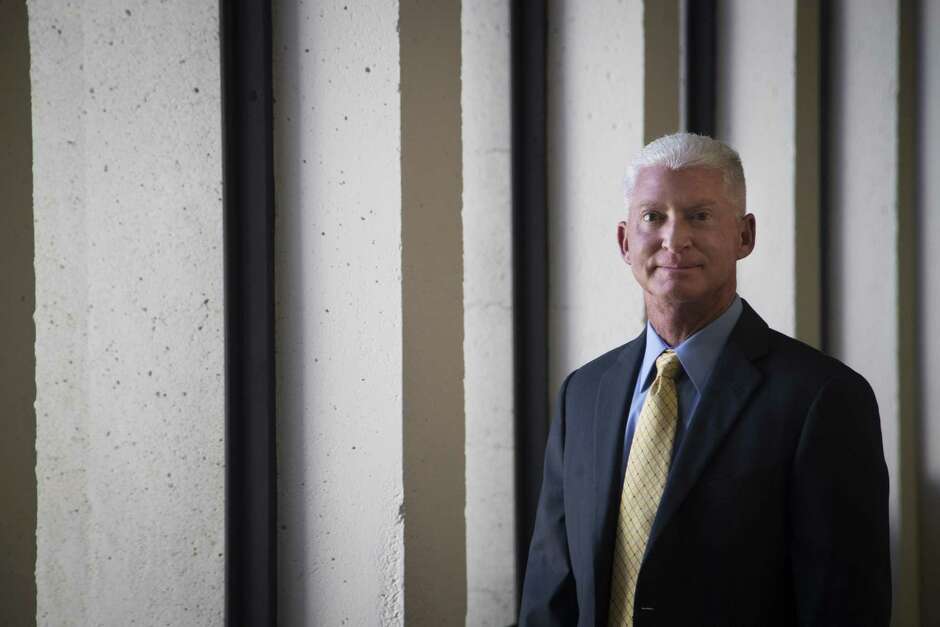
Michael A. Guidry is the founder of Guidry Group, a company established in 1985. The Guidry Group is a security services company. Tuesday, April 17, 2018, in Houston. ( Marie D. De Jesus / Houston Chronicle )

In an ideal world, no one would need the Guidry Group, an international kidnap and ransom, security services and crisis management company. In the actual world, the Guidry Group has resolved more than 70 kidnappings and 40 extortion cases. Its Crisis Management Team tackles an ever-growing number of global threats and emergencies such as terrorism, state-sponsored violence, cyberattacks and natural disasters.

Q: How did you get involved in kidnap and ransom?
A: My kidnap and ransom training began while I was a state trooper in Texas. I loved negotiating in hostage situations, so I put myself through training, not only in the U.S. but around the world. I continued training while at the international company — and still train today. This helps me stay current with the ways kidnappings and extortions can happen. Methods of payment, items requested for negotiations and more continue to change. My skills have to change with them.
Q: Do you have any special “tricks” to save kidnap victims?

A: Basically, we take over the situation and do the negotiations. I don’t know if I’d call our techniques “tricks.” We try to get into the perpetrators’ minds and determine what they really want. Experience is important, as is learning the “do’s” and “don’ts,” and doing more of the “do’s.” Keeping our clients — not happy, because they won’t be happy — but satisfied, is important.
Read more [HERE]. 
Thursday, October 26, 2017

The scientists persuading terrorists to spill their secrets

The following article I came across with respect to the work/research I am involved in regarding interviewing/debriefing/interrogations. There are many direct connections to crisis and hostage negotiation including: active listening, rapport building, slowing things down, having a plan, emotional control and more.

The article is long, but well worth reading:


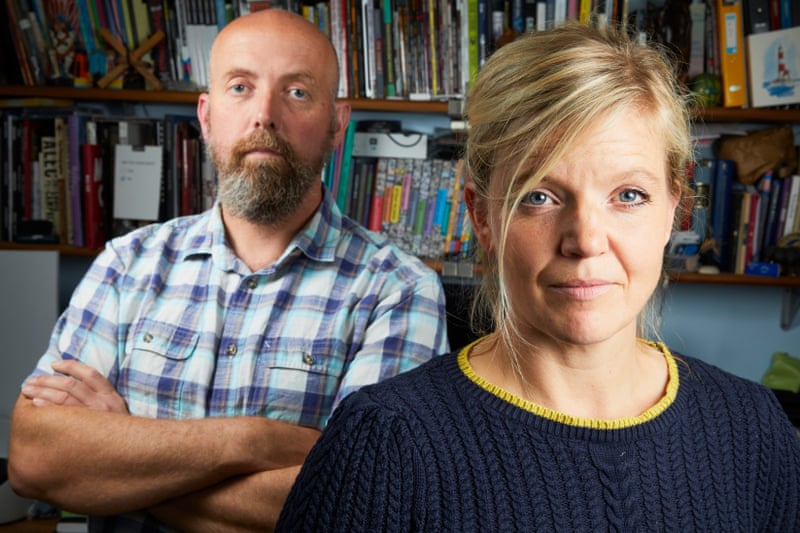
Psychologists Emily and Laurence Alison from the University of Liverpool. Photograph: Christopher Thomond for the Guardian

Expert interrogators know torture doesn’t work – but until now, nobody could prove it. By analysing hundreds of top-secret interviews with terror suspects, two British scientists have revolutionised the art of extracting the truth. 

...Watching and coding all the interviews took eight months. When the process was complete, Laurence passed on the data to Paul Christiansen, a colleague at Liverpool University, who performed a statistical analysis of the results. 

The most important relationship he measured was between “yield” – information elicited from the suspect – and “rapport” – the quality of the relationship between interviewer and interviewee. For the first time, a secure, empirical basis was established for what had, until then, been something between a hypothesis and an insider secret: rapport is the closest thing interrogators have to a truth serum.


...“Being nice is far and away going to be more fruitful than being an asshole. I could scare the crap out of you in the next 10 seconds, if I really wanted to. But you know, what is that going to do?”
“You have to present a very empathetic, supportive environment.”
“Rapport is what we do. I was trying to think of why I’ve had success, or we as a team have had success with these guys, and I think, in some respect, that they are interested to tell their story – they’re interested to tell the ‘why’. So I think talking to them in a way that is non-judgmental [gets results].”
Read the full story [HERE].


Tuesday, March 25, 2014

Negotiations With Terrorists

CERIS Interview Professor Guy Olivier Faure (Université Paris V Sorbonne): Asymmetric Warfare: Negotiating with Terrorists

Professor Guy Olivier Faure is an expert in the field of International Negotiation. He is a Professor of Sociology at the Sorbonne University, Paris V, Department of Social Sciences. He is also a visiting professor in a significant number of Universities all over the world. He lectured in various countries in Europe, in the US, in China and Latin America. His works have been received very well by the public and have been translated in nine languages. M. Faure is the author, co-author and editor of a dozen of books and over 50 articles, including: Negotiating with terrorists: strategy tactics and politics (Taylor & Francis Group, 2010, co authored by William Zartman), La Negociation: regards sur sa diversité (Publibook, 2005), How people negotiate: resolving disputes in different cultures (Springer, 2003), etc. Moreover, he is a member of the editorial board of three major international journals: Negotiation Journal (Harvard, Cambridge); Group Decision and Negotiation (New York); International Negotiation (Washington).


Thursday, March 13, 2014

Get a Masters in Negotiation


Interested in getting a MS in Negotiation? Check this out then. 

I did it and really enjoyed it. It's primarily online while you go to Omaha twice for week-long intensive sessions. It was not easy (some think online programs=easy) but really enjoyable and well worth it.

If you have any questions, let me know.

Monday, February 17, 2014

5 Tips On Measuring Crisis & Hostage Negotiation Progress


This article explores how progress is measured during crisis and hostage incidents based on research while it can also be applied to non-hostage and crisis negotiations.

Wednesday, January 15, 2014

Saving Face: The Concept of "Mianzi" In China

Saving Face is important across cultures and is an important concept for police crisis and hostage negotiators to understand.  Check out this important (short video) from the U.S. Army shared by the United States Air Force Culture and Language Center (AFCLC) in regard to saving face, respect, and Chinese culture.

Monday, November 25, 2013

Listening, empathizing and building rapport to handle crisis

Buying time is one of the most essential tasks of a crisis negotiator.

"In a crisis situation-where there is homicide, hostage taking or suicide-the suspect is generally not thinking rationally," Beatty said. "If you just keep a person from doing whatever it is they are intending long enough, they will calm down, think about it, and realize how bad of an idea it is to harm themselves or others." 


Monday, October 14, 2013

Transparency makes its mark in Dubai standoff

The dramatic events of Sunday, when a woman walked into the offices of Dubai's Public Prosecution and threatened to blow herself up, illustrate how much ground both Dubai Police and the UAE national security agencies have covered in recent years in the field of crisis management.

Monday, October 7, 2013

The FBI Hostage Negotiator’s Persuasion Tips

Inside a white clapboard house are two innocent human beings and a desperate man with means, motive, and opportunity to make it all end poorly.
This is what you see on your laptop screen.
What do you do?
Hostage Negotiation and Persuasive Design
Photo: from maritzmotivation.com

Wednesday, October 2, 2013

NTOA Webinar – Negotiations: Understanding the Incident Assessment Process


National Tactical Officers AssociationDoylestown, PA (September 2013) – The National Tactical Officers Association (NTOA) will be hosting a new webinar for NTOA members on Negotiations: Understanding the Incident Assessment Process. Det. Jan Dubina (ret.), the current Chair of the NTOA Crisis Negotiation Section, will provide an overview of the Incident Assessment Process used during an ongoing hostage / barricade incident.

Wednesday, September 25, 2013

NYPD Police talk down suicidal man from bridge

Lt. Jack Cambria of the NYPD’s Hostage Negotiation Team made a personal connection to the distraught man and convinced him to commit to 24 more hours. Todd Maisel/NY Daily News.

International Negotiators Working Group 2013 Conference


About this event

It is a great honour for the Australian Federal Police's Specialist Response Group to be hosting the International Negotiators' Working Group (INWG) 2013 conference.
The 2013 conference theme focuses on the complexities faced by government negotiators dealing with listed terrorist organisations. Presentations will be tailored to meet the needs of police negotiators and will provide you with the opportunity to hear from and connect with your police negotiator partners from around the world. The conference will be hosted in Sydney, Australia. Sydney is known to be one of the busiest commercial hubs in the Asia-Pacific. The city boasts a number of iconic attractions, some of the best-known being the Sydney Opera House and the Sydney Harbour Bridge.

Monday, September 23, 2013

Negotiations Reveal Valuable Intelligence


Negotiations Reveal Valuable Intelligence

The question of ransom payments is inevitably vexatious, involving both anguish for the families of captives and a whole host of complex issues for governments and companies.

Monday, September 16, 2013

Top Tips From FBI Hostage Negotiator On Crime & Business


Josh Wolfe (via Forbes.com) We sit down with Gary Noesner, the former Chief Negotiator for the FBI, and the first person to ever hold that position. Mr. Noesner regales us with stories of the toughest people and situations he’s ever encountered, life as a hostage negotiator, and how these skills can translate to business.

Monday, September 9, 2013

Crisis Negotiations, Fifth Edition: Managing Critical Incidents and Hostage Situations in Law Enforcement and Corrections [Paperback]

The fifth edition of this seminal book is available for pre-order at Amazon.com. and comes out October 15.

Description:
The 5th Edition of this classic text presents a user-friendly resource for practicing negotiators and a ready reference for courses in crisis management in criminal justice, psychology, and criminology programs. The new edition has added summary bullet points for easy reference when negotiators are in the field, a review of the literature since the last edition appeared, a discussion of the strategic planning process involved in high-risk negotiation incidents focused clearly on the critical questions negotiators need to ask themselves about a high-risk incident, and a practical applied-psychology approach to personalities that engage in high-risk incidents.

Wednesday, September 4, 2013

Every call is different, and delicate, for Lynchburg police crisis negotiators


Trent explained negotiators’ first and most important duty is to keep everyone calm. To that end, it’s important for the lead negotiator to build rapport with the subject. The lead negotiator usually is the only person to speak with the subject.

Monday, September 2, 2013

National police officers gathering in Saskatoon to focus on mental health

Police officers facing a potentially dangerous citizen in the midst of a 

mental health crisis need to know they can use alternatives to lethal 

force, says a filmmaker who will address police boards from across 

the country this week in Saskatoon. Photo: The StarPhoenix


Police officers facing a potentially dangerous citizen in the midst of a mental health crisis need to know they can use alternatives to lethal force, says a filmmaker who will address police boards from across the country this week in Saskatoon.
Leaders must encourage a police culture that supports officers in taking the time to prevent deadly outcomes, said Laura Sky, whose documentaries have included an examination of police use of lethal force and post-traumatic stress among officers.

Thursday, August 29, 2013

Hostage & Crisis Negotiators: Nonverbal Communication Basics

The appearance of the
negotiator matters.

Learn the skills used by these expert negotiators and how it can help you.
Nonverbal communication plays an important role during hostage and crisis situations involving law enforcement personnel.  Nonverbal communication is not limited to solely “body language” but rather includes a variety of other elements.  To raise awareness of the numerous nonverbal communication elements that are possibly present during an interaction, I created the METTA acronym (movement,environment, touch, tone, and appearance) during my doctoral research on nonverbal communication and mediators.

Wednesday, August 28, 2013

Journalist recalls her kidnapping, torture, rape; yet forgives Jihadist captors

Amanda Lindhout in Somalia
Photo credit: Canadian Press

Canadian freelance journalist Amanda Lindhout has written a book about her traumatic 15 months in captivity, and the torture she endured at the hands of a gang of Muslim teenagers in Somalia in 2008.

Tuesday, August 27, 2013

What Is Stockholm Syndrome?


BBC.com- Forty years ago, the term Stockholm Syndrome was coined at the end of a six-day bank siege. What is it and why is it cited time and again in hostage situations?

Most people know the phrase Stockholm Syndrome from the numerous high-profile kidnapping and hostage cases - usually involving women - in which it has been cited.