Monday, March 31, 2014

In This Corner: Breaking The Code of Silence- A Lesson From Columbine

In This Corner
By Lynne Kinnucan

TAKING CRISIS INTERVENTION HOME

Dear Readers,

The stream of school shootings since Columbine has left a bitter question: since circumstances all but rule out intervention, are there really any tools for prevention?
  
The response from schools, communities and law enforcement has been yes – and all of them have focused on what the FBI calls “law enforcement’s most powerful nonlethal weapon”: communication.

These school shootings have one characteristic that separates them from other acts of school violence: the shooter does not suddenly snap; rather the shooting is meticulously planned over a period of time.  The Secret Service has found that in more than 80 percent of critical incidents, the shooters explicitly revealed their intentions to their peers. Far from being "invisible," most shooters were already of concern to people in their lives.

And this is the critical second part: students know, but they do not talk.

Prevention, then, means taking the fight to the front lines: the students and their parents.  It means getting teenagers to talk to parents, something that is difficult in the best of times, but perhaps more so in this situation, when there are significant reasons for their silence.

In the following article, Breaking the Code of Silence, Dwayne Fuselier, clinical psychologist and retired FBI hostage negotiator, and researcher Jeffrey Daniels take us straight to the heart – and art – of getting people to talk. 

From dealing with bullying to preventing school shootings, communication is the first and best prevention we have.  If we can find a way to bring these strategies home, if funding and training now devoted to aftershock and trauma can be expanded to prevention, then perhaps we will have found the means to forestall these tragedies and save precious lives.

Tuesday, March 25, 2014

Negotiations With Terrorists

CERIS Interview Professor Guy Olivier Faure (Université Paris V Sorbonne): Asymmetric Warfare: Negotiating with Terrorists

Professor Guy Olivier Faure is an expert in the field of International Negotiation. He is a Professor of Sociology at the Sorbonne University, Paris V, Department of Social Sciences. He is also a visiting professor in a significant number of Universities all over the world. He lectured in various countries in Europe, in the US, in China and Latin America. His works have been received very well by the public and have been translated in nine languages. M. Faure is the author, co-author and editor of a dozen of books and over 50 articles, including: Negotiating with terrorists: strategy tactics and politics (Taylor & Francis Group, 2010, co authored by William Zartman), La Negociation: regards sur sa diversité (Publibook, 2005), How people negotiate: resolving disputes in different cultures (Springer, 2003), etc. Moreover, he is a member of the editorial board of three major international journals: Negotiation Journal (Harvard, Cambridge); Group Decision and Negotiation (New York); International Negotiation (Washington).


Friday, March 14, 2014

What's Negotiable: Cigarettes for Humans?

"We essentially exchanged cigarettes for victims in this case and that's obviously something we are willing to do," he said. 

"As long as that person is working with us and releasing hostages, that's something that we found that cooperation level was something that gave us hope and allowed us to continue those negotiations. As long as he was dealing with us appropriately ... we're going to keep that (compliance) going."
Read the full story from WEAU HERE

Thursday, March 13, 2014

Get a Masters in Negotiation


Interested in getting a MS in Negotiation? Check this out then. 

I did it and really enjoyed it. It's primarily online while you go to Omaha twice for week-long intensive sessions. It was not easy (some think online programs=easy) but really enjoyable and well worth it.

If you have any questions, let me know.

Sunday, March 9, 2014

Negotiation Lessons Learned by an FBI Hostage Negotiator


Retired FBI Chief Negotiator Frederick Lanceley shares some important lessons he has learned while also showing how these learnable moments apply to other types of negotiations such as being a salesperson.

Thursday, March 6, 2014

In This Corner: Personality Disorders

IN THIS CORNER
                        Lynne  Kinnucan

“When you’re negotiating with the mentally ill,
you have to really care
and they have to know it."

Jack Cambria, Commanding Officer, NYPD HNT


Hostage negotiator Dwayne Fuselier (FBI, ret.) once wrote that “the majority of incidents that negotiators actually confront involve a perpetrator characterized by a mental or emotional disorder.”  

With a statistic like this, a knowledge of personality disorders is an invaluable tool.

Used correctly, it is invaluable in understaanding a subject’s worldview, thought patterns and emotional needs... and developing flexible strategies to meet them.

Sunday, March 2, 2014

PATIENCE as a Weapon

PATIENCE as a weapon
Sep 25, 2002

Stephen Shaw, Staff Writer

DURHAM - Holed up with a loaded handgun in a Whitby townhouse surrounded by tactical officers, former star football quarterback Thomas Powell was facing "fourth and goal."

After kidnapping and raping his ex-girlfriend, who managed to escape after a four-hour ordeal, the 42-year-old ex-jock dialled 911 and demanded the police go away. Under the influence of an all-night drug and alcohol binge, Mr. Powell was threatening to turn the gun on himself when a Durham Regional Police crisis negotiator took over the conversation from the 911 operator.

"Hi, I'm Tom. I'm a police officer," began the calm voice at the end of the line.

Sunday, February 23, 2014

Trust Building Tactics

Australians Losing $7 Million A Month To Internet Fraud
Australians transfer at least $7 million a month in to the accounts of fraudsters but police say many victims refuse to believe they've been the subject of a scam and so they're now teaming up with psychologists to develop more effective ways to stop the fraud. 
See how this type of crisis situation is created by a skill used by crisis and hostage negotiators...

Monday, February 17, 2014

5 Tips On Measuring Crisis & Hostage Negotiation Progress


This article explores how progress is measured during crisis and hostage incidents based on research while it can also be applied to non-hostage and crisis negotiations.

Saturday, February 15, 2014

FBI Reveals Hostage Negotiation Strategies

Denver FBI agent Dave Joly said says there are two objectives a negotiator has going in a standoff situation. 
1- Public safety. 
2- Bring calm to any escalating confrontation.

Sunday, February 9, 2014

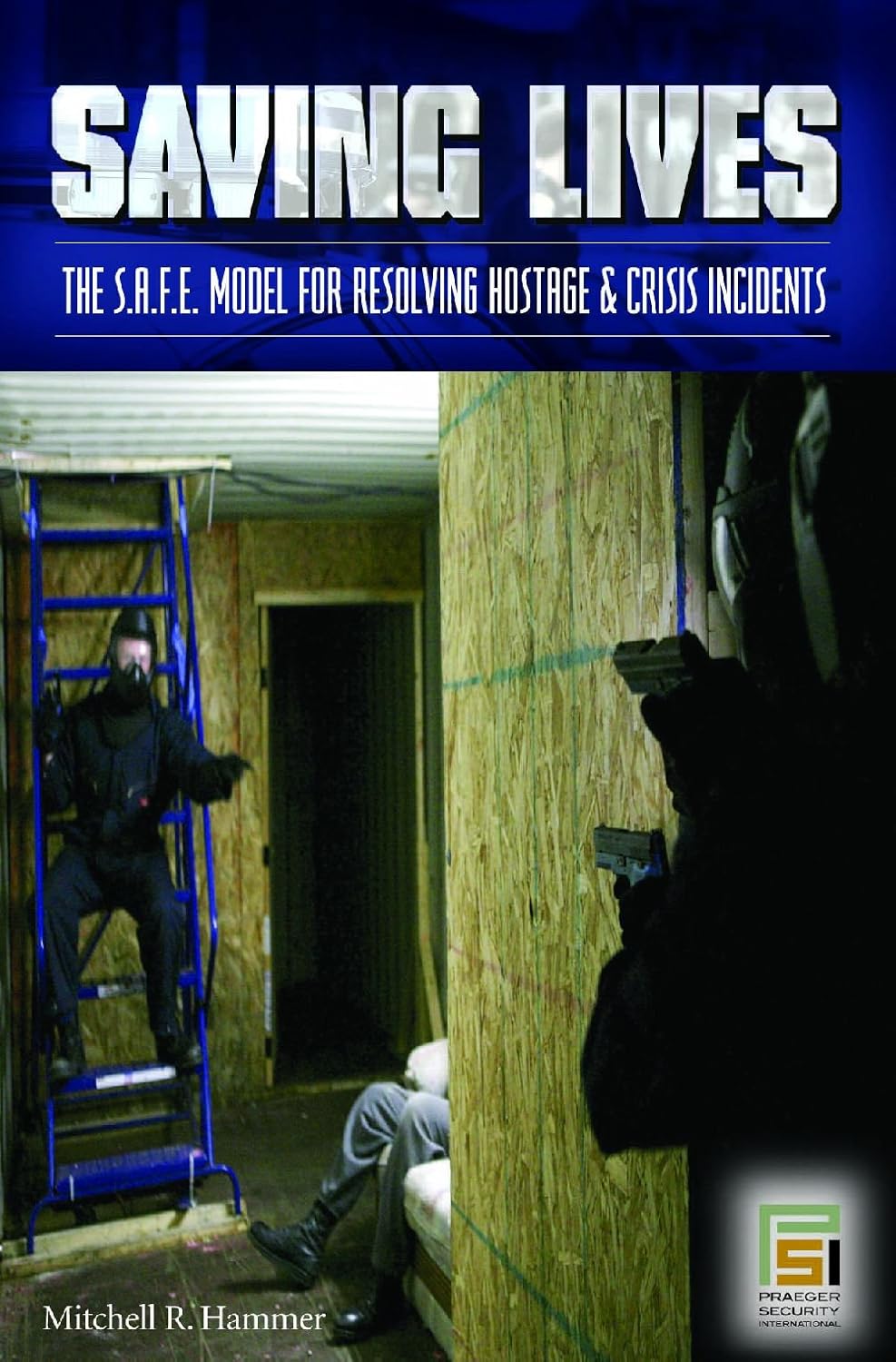
Saving Lives: The SAFE Model for Resolving Hostage and Crisis Incidents


(From the review)- This book is a concise modern-style textbook that allows the reader to get substantive content grounded in research and brought to life by actual examples. The stories are provided in a much more practical and beneficial manner- ones that are straight to the point while also being analytical and utilizing a new model. The end result for the non-hostage negotiator reader is coming away with a firm understanding of what makes negotiators effective in a specific setting, and if he or she chooses, ample opportunities to apply it to their work.

Monday, February 3, 2014

The Power of Empathy

Why read about empathy when you can watch RSA Animate short clip below?

For those are not aware of RSA Animate, think of TED Talks but drawings or animations instead.  The ones I have seen are good, really good. 

I frequently say during my trainings, workshops, and lectures that empathy is one of the most important words not only in crisis and hostage negotiation incidents but in life in general.  

Not only is it an important word, but the importance is pointless unless it is understood and practiced daily.  Empathy is a tool, when used genuinely, that can help a crisis hostage negotiator be effective in assisting people that are involved in a crisis. Remember empathy, as the video explains, is not the same as sympathy. 

Empathy is what shows we are not "full of it" but rather we actually want to work collaboratively with the subject while also it is what makes active listening effective.  The contrast is just letting the person talk while not engaging in any of the active listening skills here. Empathy is critical to building rapport, developing trust, and being charismatic to guide the subject to reappraise their situation and seek out alternatives to resolving the situation.


Instead of me writing more (I can do that in another post!), enjoy the short clip below:

Saturday, February 1, 2014

In This Corner: When Worlds Collide


IN THIS CORNER
...When Worlds Collide

By Lynne Kinnucan

“The past is never dead.  It's not even past.”
William Faulkner


The nightly news runs films of returning veterans, happy families, strangers holding up signs of gratitude and respect. Yet too many never make it back at all, and of those who do - the ones who suffer no memorial but their own - re-entry is often more of a collision than a homecoming. The shell-shocked father in a shouting match with his wife as the family begins to crumble.  The commanding officer who knows that obedience is the first law of survival and goes into shock when a workplace employee says no.