Sunday, May 24, 2015

In This Corner: The Antisocial Personality Disorder (It’s all about me!) Hostage-taker


Reprinted  with permission from the author’s book,  Hostage/Crisis Negotiations: Lessons Learned from the Bad, the Mad, and the Sad, and with credit to the publisher, Charles C. Thomas.
     
The Antisocial Personality Disorder (It’s all about me!) Hostage-taker*
                                             By Thomas Strentz, Ph.D., FBI (retired)

* * *


A few years ago, police in New England cornered a young man, who, after a long hot pursuit from an aborted bank robbery in Vermont entered a residence in Massachusetts, and took a deputy sheriff and his children hostage in their home. This individual, who said he had to rob the bank because his parole agent was demanding he repay the car loan that he lost gambling, met his father for the first time when they were in the same state prison.  During protracted negotiations, he rationalized his situation and blamed others for his troubles. The siege ended when the deputy assaulted the subject and escaped out the window as the police entered the home.  Typically, and due to his large ego, this hostage-taker acted as his own attorney.  He was found guilty on all counts and sentenced to 40 years in state prison. (Special Agent Liane McCarthy 2000)

It is easy to recognize an Antisocial Personality Disorder (asp**) hostage-taker by his glibness, his narcissism, his seemingly stress-free voice and attitude, his high verbal skills, and his constant use of rationalization and projection to justify his situation.  His demands will be for money, escape, and other self-serving needs.  Remember, “It’s all about me!” His demeanor will remind you of criminal informants with whom you have been involved.  When one compares his chronological to his emotional age, he appears to many to be an Adult Adolescent.  During the siege he will challenge the negotiator as if the life and death hostage siege is a game.  

Tuesday, May 19, 2015

Ask Questions and really listen

This article refers to non-law enforcement crisis negotiation however it can provide a great opportunity to reflect on the importance of listening- enjoy:

Ask Questions and really listen
I’ve spent the majority of my career negotiating. I’ve made plenty of mistakes. I’ve also learned from some great negotiators. Something surprising: better negotiators focus more on the other side, than they do on themselves.Instead of telling other people what to think, they ask questions, and really listen.
Read more from Time.com [HERE]. 

Wednesday, May 13, 2015

Getting to Yes – With Yourself -- Book Review


Book Cover
John Sturrock/William Ury- "In the morning when I look at myself in the mirror, I like to remind myself that I am seeing the person who is probably going to give me the most trouble that day, the opponent who will be the biggest obstacle to me getting what I truly want.”
So writes William Ury in his just published new book,Getting to Yes with Yourself. Those who attended Collaborative Scotland’s Day of Dialogue in September at which William Ury was our guest conversationalist by video link, or who were present at The Hub in Edinburgh in 2009 when he led a full day workshop, will recall a man of warmth and humility, combined with clarity and great wisdom.
The distinguished co-author of the seminal Getting to Yes has come to the conclusion that the missing piece in all his writing about dealing with conflict is the inner one.

Read more at Mediate.com [HERE]. 

Monday, May 11, 2015

We Do Negotiate With Terrorists

Let’s stop pretending we don’t, and craft better U.S. policy to protect American hostages.
A masked, black-clad militant, who has been identified by the Washington Post newspaper as a Briton named Mohammed Emwazi.


Not making concessions to terrorists has become notnegotiating with terrorists, which has become notcommunicatingwith terrorists.
On March 1, 1973, a group of gunmen stormed into a reception being held at the Saudi Embassy in Khartoum, Sudan, taking hostage a group of diplomats that included the U.S. ambassador and deputy chief of mission. The militants—from the Palestinian group Black September, which a year earlier had killed nine Israeli athletes at the Munich Olympics—demanded the immediate release of a list of prisoners in Germany, Israel, Jordan, and the United States, including Sirhan Sirhan, the convicted assassin of Robert Kennedy. At a press conference the next day, President Nixon was asked if the U.S. government was considering Sirhan’s release. “As far as the United States as a government giving in to blackmail demands, we cannot do so and we will not do so,” the president said. “We will do everything that we can to get them released, but we will not pay blackmail.” Several hours later both U.S. diplomats were dead.
Read more at Slate.com [HERE].

Tuesday, May 5, 2015

Bill would create ‘hostage czar’ to coordinate efforts to rescue Americans

A Maryland congressman introduced legislation Friday that would create a “hostage czar,” a high-level position at the National Security Council that would centralize efforts to find and free U.S. hostages.
...The U.S. government’s approach to handling hostage cases has come under intense criticism since the Islamic State beheaded three American hostages last year. The group also claimed that an Arizona woman it had kidnapped was killed in an airstrike on one of its buildings in Syria.
Read more from the Washington Post [HERE]. 

Wednesday, April 22, 2015

8 Ways Having a Toddler Is Like a Hostage Negotiation With a Highly Unstable Person


8 Ways Having a Toddler Is Like a Hostage Negotiation With a Highly Unstable Person
1. The list of demands aren’t always clear, but when they are announced, they are often impossibly specific.
When you ask them what they want, they get so absorbed in the question that their tiny toddler brains seemingly overheat and they stammer and stutter as they try to get the words out. Saliva runs down their chin, and a circuitous, long-winded statement finally spills out like floodwater that’s been building up behind the earthworks: I wan…I want…I want to go to a movie like the Foe-zen, but I wanna bring my Lego puppy. We could have a pizza. On a Tuesday, on a rocket ship. When you tell them that their request isn’t possible, they lose it. With toddlers, every request is a potential Kobayshi Maru.

2. They protest even when you give them exactly what they want.
Read more from Yahoo! [HERE]. 

Monday, April 20, 2015

Five Strange Workplace Conversation Tips From a Hostage Negotiator


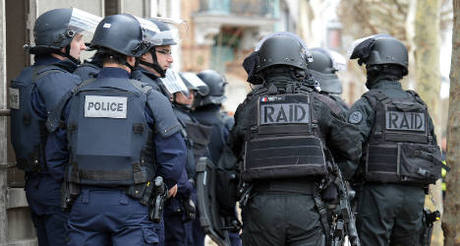
The single obstacle standing between you and a promotion, raise, or new job could be your voice, according to a paper published this month in Organization Management Journal. The study, written by a business school professor and a voice specialist, drew lessons from an in-depth interview with Christophe Caupenne, a former counterterrorist and hostage negotiator with Research, Assistance, Intervention, and Deterrence (RAID), France’s equivalent of a SWAT unit. As it turns out, persuading a maniac not to kill someone requires the same skills as talking to your boss. You never would have guessed, I bet.
Here are some of the strategies Caupenne recommends for people who want to be better at getting things out of other people at work.

1. Train your breathing on a candle.

Read more from Bloomberg Business [HERE]. 

Friday, April 17, 2015

Former FBI Lead Negotiator Chris Voss named Senior Fellow at George Washington University Center for Cyber & Homeland Security

LOS ANGELES, April 6, 2015 /PRNewswire/ -- The George Washington University Center for Cyber & Homeland Security (CCHS) announced yesterday that Former FBI International Lead Hostage Negotiator Chris Voss has been named a Senior Fellow as part of their Counterterrorism and Intelligence Task Force. Chris worked for the FBI for 24 years, and now runs The Black Swan Group, a strategic business advisory firm that solves business negotiation problems with hostage negotiation strategies. 
The Senior Fellows were selected earlier this month following an open, competitive process and will serve in the position for a two-year term starting on April 1, 2015. As a distinguished group of policy experts and practitioners in the areas of cybersecurity, counterterrorism, and homeland security, drawn from the private sector, government, academia, and the non-profit sector, Chris Voss is honored to join CCHS's non-resident senior fellows.
"I am honored to become a Senior Fellow with the CCHS as they remain on the cutting-edge of counter terrorism thinking and leadership."
Chris brings extensive knowledge from the real world of hostage negotiation and applies them, successfully, to the business and academic worlds. Voss is a Harvard graduate, USC Marshall School of Business Adjunct Professor, Georgetown UniversityMcDonough School of Business Professor, Speaker, and Author.
As a recognized international negotiations expert, Chris is frequently interviewed by major media on headline news such as the recent Germanwings crash, Ferguson riots, Boston Bombings, Somali Pirates and hostage negotiations in Iraq, Afghanistan, Nigeria, Panama, Colombia, Gaza, and Haiti.
About
Former FBI Lead Negotiator Chris Voss specializes hostage and business negotiations. Based in Los Angeles, Voss now runs The Black Swan Group, is working on a book (working title, "Killer Deals", April 2016), and teaches business leaders how to get better negotiation results with rave reviews and results. Chris' extensive media resume commenting on hostage negotiation stories includes repeat appearances on CNN, Fox News, Larry King Live, Discovery Channel, ABC News, Washington Business Tonight, Anderson Cooper, and Crime Time. http://www.blackswanltd.com/about-black-swan/

Thursday, April 16, 2015

Hostage Negotiator Trains Patrol Officers To Dial It Back


After a tour abroad teaching cops how to ease tense stand-offs, a respected former top city cop has returned to offer New Haven officers the same de-escalation training—a first-in-the-state effort launched amid police-citizen controversies nationwide.

...The police department tapped one of its own, former Lt. Ray Hassett, to teach the course. Hassett retired from the department in 2012, after 25 years as an officer. Hassett served as district manager for the Dwight neighborhood as well as the department’s SWAT chief.

Read more from the NewHavenIndependent.org [HERE]. 

Wednesday, April 15, 2015

2015 21st Annual Calgary Police Service Crisis Negotiation Conference


We are pleased to announce that our 2015 Calgary Negotiation Seminar will be available for early registration on Wednesday April 15, 2015 at:

This 21st Annual Calgary Negotiation Seminar is located in Calgary, Alberta Canada and will present several case studies as well as learning blocks. Details will be available on the website as presenters are confirmed. I have attached this year’s poster to this email for more details.

Mark your calendars for September 22 – 24, 2015 and ensure that you register early as spots are limited.

Former FBI hostage negotiation trainer explains how to get people to do what you want

Mark Goulston, a former FBI hostage negotiation
trainer, role playing.
Mark Goulston spent two years role-playing for a living.
He’d pretend to be a suicidal policeman, holding a gun to his neck, threatening to take his own life.
His job was to challenge his audience — a room full of FBI agents and police officers — to talk him out of it.
“In the end, I always pulled the trigger and then from the point of view of that role play, I would tell them what they could have asked and could have said that would have caused me to give up and surrender,” explains Goulston, a psychiatrist and former FBI hostage negotiation trainer.
Read more from BusinessInsider.com.au [HERE]. 

Sunday, April 5, 2015

Special Crisis Hostage Negotiation Webinar With Thomas Strentz

 The Association for Conflict Resolution’s Second Annual Crisis Negotiation Month
Hostage/Crisis Negotiations
Lessons Learned from the Bad, the Mad and the Sad
Tuesday, April 14th
6-7pm est. (5-6pm central, 3-4pm pst.) 
***FREE But Spots Are Limited***
Sign up [HERE]
In this Webinar, Dr.Thomas Strentz, psychologist and author with many years of experience with the FBI and as a counterterrorism consultant, will offer case histories on how to quickly identify the three main types of personality disorders with whom negotiators are likely to come into contact; understand their perceptions them and of reality; recognize their primary defense mechanisms, and how to negotiate with them.
Sponsored by the Association for Conflict Resolution and ADRhub.com, this informative and entertaining webinar is designed for crisis and hostage negotiators, but all conflict resolution practitioners including mediators, conflict coaches, students, and ombuds will find the skills applicable to the work they do.

About the Presenter:
A former FBI negotiator who designed, directed and developed the FBI negotiations program from 1975-1987, Dr. Strentz  has also committed his expertise to  the  resolution of numerous terrorist situations world-wide.
 He  has provided consultation and training in unconventional, security, and counter terrorism  operations to various US military, US federal, state and local law  enforcement and friendly foreign military/LE special operations units. He utilizes his expertise for organizations and individuals who work and travel in high-risk areas, such as domestic and international air lines, law enforcement, government agencies and the military.
While with the FBI, he also helped create the FBI Hostage Rescue Team selection program and was a pioneer in psychological profiling of criminal and terrorist offenders. He developed
 and refined aircraft hijacker and terrorist profiles currently used internationally.

Dr. Strentz is the author of two books,  The Psychological Aspects of Crisis Negotiation and

Monday, March 23, 2015

In This Corner: First Responders

IN THIS CORNER: FIRST RESPONDERS
By Lynne Kinnucan

What do you do when you’re the first officer to arrive at the scene of a crisis? The first few minutes after an officer’s arrival at the scene can have a critical impact on how the situation evolves. 
While there is no step-by-step process that fits every situation, there are three objectives that should be primary during your first moments: stay safe, calm the subject and assess the situation. Below are five guidelines suggested by experts for first responders.

1.     Stay safe.  Approach the scene cautiously.

2.     As much as possible, isolate the scene and contain it.  Clear the area of members of the public, including family members. Do not ask family members to talk to the subject.  This is precarious at best, and can be dangerous.
3.     Make an assessment of the area and note any details that might be helpful to the arriving negotiation/tactical team such as the time, date, the parties at the scene, nature of the call, and any other pertinent information.
4.     Do not start negotiating. Listen for indications of the subject’s emotional state, but do not try to problem-solve or explore motives. It is not your job to fix the situation. You are there to contain, isolate, gather information and assess.
5.     If you can engage the subject in conversation, he is less likely to pay attention to violent acts.
a.     Use active listening to gain information and calm the subject.
b.     Keep the dialogue simple and direct. Identify yourself and why you are here. “This is Sergeant Greenstein and I’m here to help.”
c.     Do not say “no”.
d.     Do not make promises.
e.     Pay attention to not just what is being said but how: pace of speech, increasing loudness or softening of tone, phrases and words that indicate resistance or openness to discussion, etc. Use active listening skills such as encouragers (mm hmmm, I see, sounds you’re pretty upset, etc.)

Statistics show that on average, more than 90% of all hostage and barricade situations are successfully resolved through communications. The best tool you have is active listening and open communication, and the information you garner in these first few minutes can provide invaluable over the course of the crisis negotiation.

Not every agency has the resources to train a first responder, but ongoing training in active listening skills is one of your best preparations for this critically important role. 


Sources:
Department of Justice
FBI Compendium
Policeone.com
Mindsetdaily.com


Monday, March 2, 2015

New NYPD Training For Patrol Utilizes HNT Skills

...Day Two’s program — called “Smart Policing” — was developed by the NYPD and focuses on communication. For example, the department asked Lt. Jack Cambria, the renowned head of the Hostage Negotiation Unit, to provide his insights to the entire force, and not just to HNU members.
Cambria, an expert on dealing with troubled people, provides a primer on how to deal with suspects by developing rapport with them and on ways to stay calm and avoid the need to resort to aggressive tactics.
Read More from dnainfo.com [HERE].