Saturday, August 30, 2014

HARVEY HOSTAGE NEGOTIATOR'S INSIDE LOOK AT STANDOFF

HARVEY, Ill. (WLS) -- In an ABC7 exclusive, a key hostage negotiator gave Eyewitness News an inside look at how he and others helped bring that suburban standoff in Harvey to a peaceful end.

It was a worse-case scenario: six kids and two adults held at gunpoint by two men who had already shot two police officers. State police, the South Suburban Emergency Response Team and the Cook County Sheriff's Police all came together with one goal: get everyone out alive. It ended almost a day after it began.

Saturday, August 23, 2014

Negotiator In Bunker Standoff Honored By FBI


Thursday, the director of the FBI, James B. Comey, presented Houston County Sheriff’s Capt. Bill Raffert with the FBI medal for Meritorious Achievement for his role in the negotiations, which eventually led to the safe rescue of 5-year-old Ethan Gillman, who was held hostage for nearly a week.

...According to the award ceremony program, Rafferty received the award at least in part after he established a rapport with the gunman, allowing the FBI to “devise” a rescue plan. Rafferty spent 12 hours a day talking to Dykes.

Read the full story from DothanEagle.com [HERE]. 

Monday, August 18, 2014

al Qaeda Begs U.S. To Negotiate

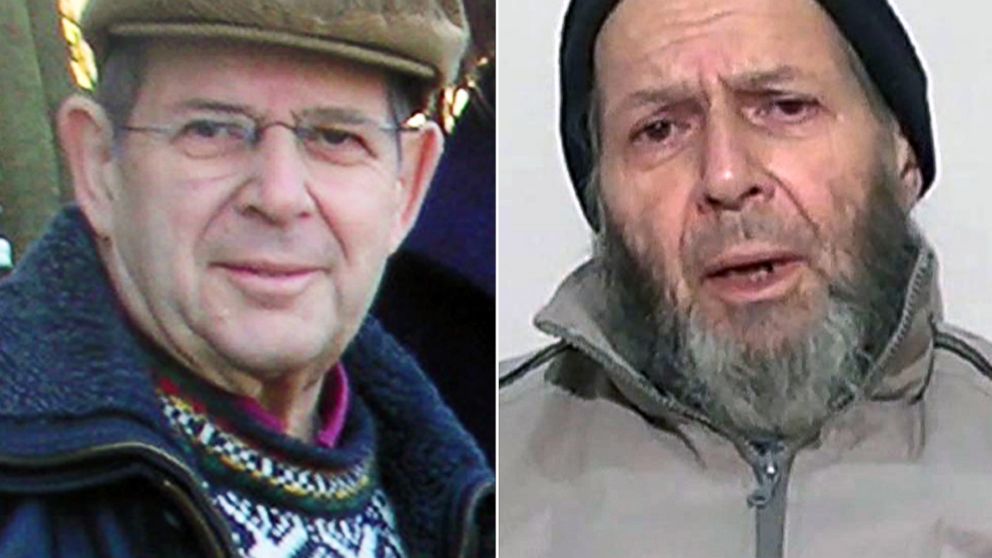
Al Qaeda issued another, more urgent public plea Wednesday to the family of American hostage Warren Weinstein to pressure Washington to negotiate for his release, but his wife told ABC News she feels "powerless" to help free him after three years.
The written, English-language message from the core al Qaeda group in Pakistan, where Weinstein, 73, has been suspected of being held against his will for three years as of this week, urged his family to "pressure your government." But there was no new video or photo of Weinstein, whose health is believed to have deteriorated in captivity.
..."They are begging for a negotiation. This is another unprompted attempt by al Qaeda to try to get something going on Weinstein," Voss, the FBI's former chief hostage negotiator, told ABC News on Thursday.
Voss also was a key counterterrorism agent in the investigation following the 1993 World Trade Center bombing of the Blind Sheikh, who U.S. officials have told ABC News will die in a U.S. federal prison serving his full life term and will never be freed. Al Qaeda isn't known for releasing hostages, and the U.S. does not as a policy negotiate with those responsible for 9/11.
Read the full story from ABC News [HERE]. 

Thursday, August 14, 2014

Crisis Negotiation Techniques in Terrorist Incidents: It’s Been 10 Years Since Beslan- What Have We Learned?

With the Society for Terrorism Research (STR) 8th Annual International Conference fast approaching, STR, partnered with the Center for Terrorism and Security Studies (CTSS), is launching a series of guest blog posts, written by those who will be presenting their research at STR14. In the sixth installment of this series Detective Jeff Thompson(@nonverbalPhD) discusses his work on the lessons learnt from the Beslan School Siege. Detective Jeff Thompson is the 2013/2014 recipient of the New York City Police Department Commissioner Raymond W. Kelly Scholarship and attended Columbia University as Research Scholar.  His research topic was crisis and hostage negotiation as well as terrorism related incidents [This article does not reflect the opinion of any group or organization that he is employed by or a member of]. 


Ten years ago terrorists in Beslan, a town in North Ossetia Russia, seized a school full of children, in what is still one of the deadliest terrorist incidents to have occurred.  The incident provides valuable insight with respect to crisis and hostage negotiations that can assist negotiators and government officials to be better prepared if they were to be involved in a similar situation where negotiating with terrorists could be the best option to ensure the least amount of casualties are suffered.

Despite the incident having displayed numerous moments that were clear examples of the terrorists escalating violence, the Beslan incident also offers valuable insight into missed opportunities where negotiators could have employed certain tactics that could have increased the chances for a more peaceful resolution.

A review of this incident, specifically conducted by Adam Dolnik (and co-author of our paper) demonstrates that established crisis and hostage negotiation skills can be effective yet the established methods of determining if a hostage incident can or should be negotiated as well as the methods of measuring progress needs to be reviewed.

Read the full article [HERE] and click the info graphic to see a larger version of it.

Saturday, August 2, 2014

The Science of Negotiation – Patterns to Predict Success or Failure

I highly recommend reading this from the brilliant people at Metric Lab.  Yes, it's a bit long and covers a variety of topics but it is well worth reading for both law enforcement and non-law enforcement personnel.  

Behavior Patterns of the Taker-Negotiator Relationship
In addition to the creation of the Crisis Communication Rating Scale, McClain’s research team applied this system to archived transcripts of hostage negotiations and obtained preliminary results. These findings have identified certain communication patterns that are associated with a peaceful resolution.
First, the research indicated that increased communication between hostage taker and negotiator led to a greater chance of peaceful resolution…
Second, it was found that as more personal information about the hostage taker was disclosed, the negotiator-taker relationship deepened, leading to feelings of trust and willingness to cooperate…
Finally, it was found that the hostage taker tends to follow the lead of the hostage negotiator. 
Read the full article from Metric Lab [HERE]. 

Friday, August 1, 2014

Leadership Expert & Hostage Negotiator George Kohlrieser Gives Tips


THE first time he was taken hostage was the worst.
George Kohlrieser was a young psychologist working alongside the domestic violence unit of Ohio’s police department. Only this time, they were not in a home but a hospital where a “very psychotic man” was holding a pair of scissors to a nurse’s neck. Despite their training and weapons, police were powerless to stop him.
“[He was] screaming and yelling and not really responding to anything. He soon cut [the nurse’s throat] with the scissors he was holding to her neck, he didn’t really make any demands he was just out of his mind,” Mr Kohlrieser said.
Read more from News.com.au [HERE]. 

Thursday, July 31, 2014

The Surrender Ritual

After working for many hours, or even days, the conclusion of a crisis and hostage incident can be incredibly tense and stressful.  Wanting to avoid any pitfalls that could derail the negotiation, the negotiator has to avoid the desire to move quickly with the subject turning him or herself voluntarily over to the authorities.

The following article by Dr. Laurence Miller from PoliceOne.com describes more about the "surrender ritual":

Wednesday, July 30, 2014

Anatomy of an Abduction

Among the interesting tidbits in this is the high reward for engaging in terrorist-related kidnappings this while also, like this infographic shows, there was little or no planning. 

With little planning, an ill-equipped group of Islamic extremists succeeded in kidnapping 32 European citizens in the Algerian desert in 2003, holding them for up to six months and ransoming them for 5 million euros.

Tuesday, July 29, 2014

Communicating Effectively for Successful Hostage Negotiations & Crisis Intervention


Enjoy the following paper written by James L. Greenstone.

Here's the abstract:


Whether it is a barricaded crisis situation or negotiations with a bad actor holding hostages, the keys to success are the skills of the negotiator or intervener to effectively communicate.
Little else matters if communications is not established, maintained and utilized in such a way that management of the instant situation becomes possible.
Most negotiators think that they are effective communicators.
 Some are. 
Many are not.
Communications must be practiced over and over again to assure proficiency.  This article provides the rudiments of the skills needed for success in the field.

Read the full article [HERE]. 

Saturday, July 19, 2014

Job Opening at the UN

HOSTAGE SURVIVAL INSTRUCTOR – SSAFE TRAINING


To apply and for questions, visit [HERE]. 

Location :Nairobi, KENYA
Application Deadline :17-Jul-14
Additional CategoryCrisis Prevention and Recovery
Type of Contract :Individual Contract
Post Level :International Consultant
Languages Required :English  
Starting Date :
(date when the selected candidate is expected to start)
01-Sep-2014
Duration of Initial Contract :12 months
Expected Duration of Assignment :12 months (3 –year retainer basis)

Background
In 2004, a proposal for strengthening and unifying the United Nations security management system was presented to the 59th session of the General Assembly in Report A/59/365 of 11 October 2004. This resulted in the adoption of General Assembly Resolution (A/RES/59/276, XI, 7 - 23 December 2004) that created the Department of Safety and Security merging the security management component of the Office of the United Nations Security Coordinator (UNSECOORD), the Security and Safety Services (SSS) and the civilian security component of the Department of Peacekeeping Operations (DPKO) into a single security management framework.

Wednesday, July 2, 2014

Your Stress is Contagious

Crisis and hostage negotiators- your verbal and nonverbal actions are contagious.  As "guides" in assisting people involved in a crisis, you can help or hinder them on their journey.

Sometimes your actions and words spoken are purposely done, yet other times unknowingly you "leak" out anxiety, stress, and discomfort.

Tuesday, July 1, 2014

In This Corner: If It's Broke, Don't Fix It

By Lynne Kinnucan

If It's Broke, Don't Fix It...

At least not right away. Hostage negotiators will tell you that resolving the problem is the last thing they do. Before you solve any problem, you must reach the person inside it: the furious, out-of-control man with a gun, the shadowy figure ready to jump off a bridge.

Enter the Active Listening Skills, “law enforcement’s most powerful nonlethal weapon”. Derek Gaunt drills them into his trainees “every single day, from the afternoon of their first day to the day they graduate from the advanced class. I want these skills ingrained in them.”

Thursday, June 26, 2014

Research on First Impressions & Tone

In a follow-up to my previous post on how important a negotiator's tone of voice is (Quick Tip: Hostage Negotiator's Tone of Voice), I came across this:

How To Make The Perfect First Impression (According To Science)

The tone and tenor of your voice also plays a significant role in determining what kind of first impression you make on others. A Scottish study found that participants overwhelmingly agreed, based on hearing a subject's voice, on a number of personality judgements, including trustworthiness, aggressiveness, and warmth. 
“[Psychologists] have confirmed that people do make snap judgments when they hear someone’s voice,” Drew Rendall, a psychologist at the University of Lethbridge, told Science Mag. “And the judgments are made on very slim evidence.”
Research studies demonstrate how important first impressions are and it's one of the reasons a main component of PhD explores this with mediators.  
Additionally, I am doing another study with law enforcement hostage negotiators and how they do their introduction (hint: the training manual suggestions are not consistent).
Read the full article at Huffington Post here.

Tuesday, June 24, 2014

What I Learned About Social Leadership & Listening From a Hostage Negotiator

In her latest diary entry, Eugenie explains what charity leaders can learn from hostage negotiators


As social leaders, we ask a lot of questions. What can I do to help? What do people need? What's my place in the world? But, what I've learned recently is: we should be asking far fewer questions.
As part of the Clore Social Leadership Programme that I'm on, we get training opportunities that we might not otherwise either know about or afford.
I got it into my head that I wanted to do some unusual training with unusual leaders and tracked down former hostage negotiator Dick Mullender. I confess, I was sold on the name alone and arranged a workshop on the art of listening and negotiation.
Dick Mullender
It was some of the best training I've been on. Mullender straight off challenged us on what we think it really means to listen…

Read more from The Guardian [HERE].