Friday, February 19, 2016

For hostage negotiators, standoffs are a precarious, taxing 'teeter-totter'

Get insight into a recent hostage negotiation job that recently occurred in Omaha, Nebraska.


Most of the time, nearly everyone involved in a hostage negotiation — including law enforcement officers and the person with whom they are negotiating — understands on some level that the situation might end badly.

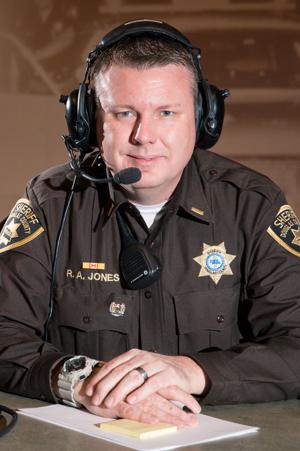
“It’s always in the back of our minds. We’re realists,” said Lt. Rob Jones, commander of the Douglas County Sheriff’s Office’s hostage negotiation unit. “But we go into it with a positive attitude. We have to try.”

“It’s like a teeter-totter,” Jones said. “Emotions are high, rationale is low. You try to get the emotions down and the rationale up.”

There are usually two kinds of people who hole up and take hostages, he said: an “instrumental” person, which is a hostage-taker who is only taking a hostage as a means of leverage to negotiate an escape, and an “expressive” person, who is going through a crisis and has an emotional connection to the person they are holding hostage. In many cases, the expressive person’s end goal is suicide, Jones said.

Read the full story [HERE]. 

http://studio.omaha.com/?ndn.trackingGroup=91341&ndn.siteSection=omahalanding&ndn.videoId=30342450&freewheel=91341&sitesection=omahalanding&vid=30342450

Wednesday, February 17, 2016

2009 George Washington Bridge jumper tells his tale


ADRIAN RAWN SURVIVED JUMPING OFF OF THE GEORGE WASHINGTON BRIDGE IN 2009 THANKS TO A CONFLUENCE OF FACTORS — INCLUDING A STINT ON THE NAVAL ACADEMY WATER POLO TEAM.

Adrian Rawn regretted jumping off the George Washington Bridge before he even hit the water.
Rawn somehow remained conscious after plummeting more than 200 feet into the Hudson River. As the choppy water filled his mouth, the man who just moments before wanted nothing more than to die swam desperately for safety.
...“Even before I hit the water I was already regretting it. I still remember that,” he said.

THE PLUNGE FROM THE GEORGE WASHINGTON BRIDGE CAUSED ADRIAN RAWN INSTANT REGRET — BUT HE LIVED AND IS WARNING OTHERS.

“The wind was knocked out of me. That’s the first thing you do, you catch your breath, get the air flowing,” he said. “It’s choppy, so there’s water splashing at your mouth, you’re trying to clear your airway.
Read the full article [here]. 

THE BOOKS YOU’VE BEEN WAITING FOR: QUICK TIPS FOR GETTING OUT OF CONFLICT

IN THIS CORNER
By Lynne Kinnucan

THE BOOKS YOU’VE BEEN WAITING FOR:
QUICK TIPS FOR GETTING OUT OF CONFLICT


Stop the Dreaded Drama: 55 Tips for Ending Destructive Conflict  
Stop Avoiding Conflict: Learn to Address Disputes Before They Erupt

 Patricia Porter has a new MiniBük out, and we should all be glad. A companion to her 2014 Stop the Dreaded Drama: 55 Tips for Ending Destructive Conflict,   Stop Avoiding Conflict: Learn to Address Disputes Before They Erupt, expands this territory by focusing on the sabotaging effect of conflict avoidance. It provides detailed analyses of disputes and suggestions for actions. It is specific, multi-layered in its approach, as well as concise and reader-friendly.

It is also five inches tall, making it easily available on a moment’s notice.

Together the two MiniBüks are an instant-rescue team for the layperson in conflict. For fast reference, each tip in Stop the Dreaded Drama is only a few sentences long; Stop Avoiding Conflict goes into more planning and strategy but is equally accessible.

Friday, February 12, 2016

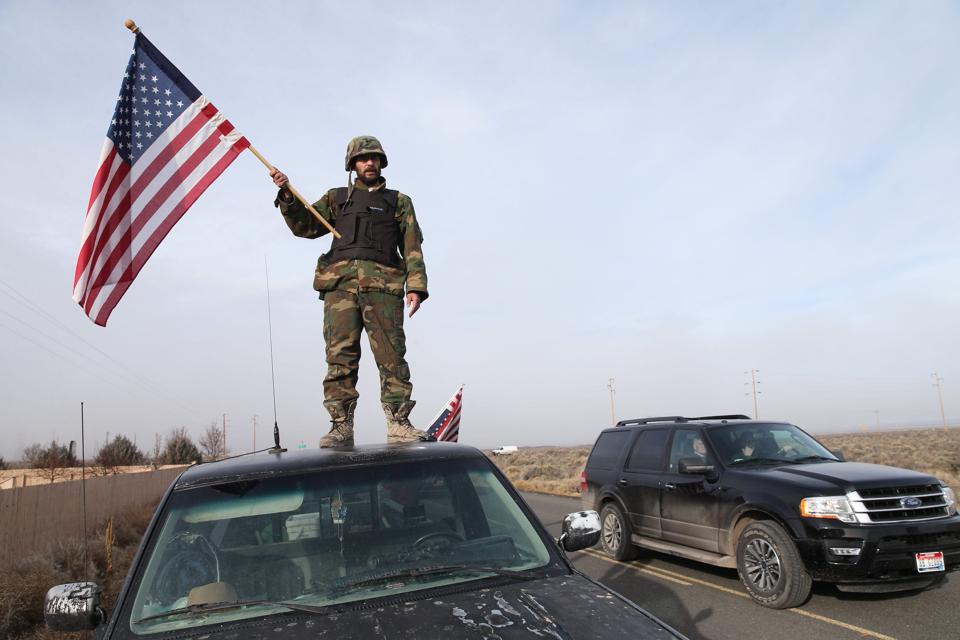
Oregon Standoff Ends & The Surrender Ritual: Saving Face, TPI's & More


The standoff in Oregon has concluded on Thursday after lasting for more than a month. The following article provides a great recap of the final moments and sheds some insight into the "surrender ritual"- the concluding moments of a a crisis/hostage incident.  

The articles touches on the use of TPI's, the importance of face-saving for the subject, as well as the increasing impact that social media has- the conversations between the subject with the FBI and TPI's was broadcasted live on YouTube. 

Some snippets from the article: 


  • The end came with breath-holding moments as a Nevada state legislator and a North Carolina evangelist worked with FBI negotiators to keep the last anti-government protester from killing himself.
  • Over the next five hours, the public listened as the holdouts negotiated with the FBI. An ally of the group broadcast the real-time drama via an open phone line carried on YouTube, with more than 60,000 people eavesdropping at one point.
  • "If everybody says 'hallelujah,' I'll come out," he said. He mentioned having a cookie and cigarette while the negotiators considered his request.
  • The four eventually agreed they would surrender in the morning – but only in the company of Nevada Assemblywoman Michele Fiore and evangelist Franklin Graham, president of the Billy Graham Evangelistic Association named for his father.

Read the full article [HERE]. 


Wednesday, February 10, 2016

3 Powerful Conflict-Resolution Strategies From an Antiterrorism Leader


No matter how intense the conflict is in your life and business, chances are it's relatively small in comparison to what Aldo Civico has been through. He begin his career fighting the mafia in Italy (his own country), then facilitated ceasefire talks between the guerrillas and the government of Columbia, which led him to work in several countries from Mexico to Haiti to the Middle East and Syria.
Mr. Civico has been in the middle of some serious antiterrorist action over his career and now teaches at Rutgers University and Columbia University. I had the opportunity to speak with Mr. Civico and asked him to share the most critical lessons he's learned that would be applicable to entrepreneurs and these are the top three insights he shared.
1) Deploy the Power of Listening. The biggest mistake most people make when facing conflict is that they are so focused on what they want to say that they fail to hear the needs of the person they are in conflict with. In Mr. Civico's own words, "When you listen you connect with the other person. Listening elicits the model of the world by which the other operates. It facilitates understanding the needs, fears, desires of the other. It also helps you to get a different perspective about your own perception. It gets you out of your head and it opens up a space of possibilities. It's the easiest concession we can make in a negotiation.
Read more via Inc.com [HERE]. 

Tuesday, February 9, 2016

Inside look at SCMPD Hostage Negotiation Team

WTOC-TV: Savannah, Beaufort, SC, News, Weather


SAVANNAH, GA (WTOC) -
Last Thursday, the Savannah-Chatham Metro Police Department safely ended a 10-hour standoff with a gunmen at an apartment complex on Grove Point Road.
Robin Fallin, 66, is charged with simple battery and aggravated assault on a law enforcement officer. Hostage negotiators communicated sporadically with Fallin for hours until he walked out of the home and was arrested.  
WTOC got a closer look at the SCMPD Hostage Negotiation Team (HNT), which is made up of 13 members, all of which have 15-20 years of experience.
"I would not consider anything that we do routine, every situation is different," said Lt. Jeff Olson, the commander for SCMPD HNT.

Read more [HERE]. 

Monday, February 8, 2016

How Cops Can Best Deal With Vets (Time.com)


How should we keep veterans with post-traumatic stress disorder, traumatic brain injury, and/or hearing loss from getting shot from altercations with police?

Police are increasingly the first responders for responding to veterans in trouble, including those exhibiting disruptive behavior, barricade situations, and “suicide-by-cop” attempts.

... Here are some tips for law enforcement who may find themselves dealing with veterans:


Read the full article [HERE].

Friday, January 29, 2016

Testing the Role Effect in Terrorist Negotiations


Here's another great academic paper from Paul J. Taylor. This time he teamed with William Donohue (another great researcher/academic) to write Testing the Role Effect in Terrorist Negotiations (International Negotiation, 8, 527-547). .

Some important snippets and findings from the article:


  •  Religious fundamentalists showed greater levels of aggressive strategies than both nationalist-separatist and social revolutionary terrorists
  • Consistent with predictions, the data presented in Table 2 indicate that the use of power and affiliation behaviors by terrorists have quite different associations with the degree that authorities capitulate. Of the power-orientated strategies, violently controlling hostages, damaging the building or aircraft, and extensively using weapons were all associated with lower levels of concessions from the authorities. The exception to this trend was the correlation for the Demand scale, which suggested a positive relationship between making more demands and concessions by the authorities. 
  • Regarding the prominence of role identity, when compared to nationalist-separatists and social-revolutionaries, the terrorists with a religious ideology typically used more aggressive strategies
  • Religious terrorists engaged in very little affiliative behavior compared to nationalist-separatists and social-revolutionaries. This unwillingness to engage in normative interaction illustrates the religious terrorist’s lack of interdependence with the system they are attacking and their determination to achieve a set of goals without giving consideration to alternatives (Silke 2003). 
  • Perhaps the most significant implication of these findings is... when the lower-power party (i.e. the terrorist) engaged in extreme aggression, the higher-powered authorities quickly reciprocated with tactical attempts to resolve the dispute.
I encourage you to read the full article [HERE]. 

Saturday, January 23, 2016

UK police start review of Sydney siege


(AAP)- A team of top UK police with expertise in counter-terrorism, hostage situations and firearms has arrived in Sydney to review how local officers responded to the Lindt Cafe siege.

...Hostages and law enforcement officers involved in the incident will be among witnesses called to give evidence and the UK officers are also expected to give evidence about their review.

Read the full article [here]. 

Friday, January 22, 2016

Beyond Bombings: The Islamic State in Southeast Asia


Beyond Bombings: The Islamic State in Southeast Asia

Note the importance of the tactics being used includes hostage-taking and kidnapping:

On 30 June 2015, a Malaysian court convicted a man and his son for fighting with ISIL and planning terrorist incidents at home. But it was not a wave of bombings they were plotting, but rather the kidnapping of politicians.  While hostage taking, executions and barricade style attacks garner less concern from security services than bombings, this is potentially an important development at both the tactical and strategic levels for Southeast Asian militants.  If we are to understand the real impact of ISIL on Southeast Asian militancy, it is this.
Hostage taking has become the face of ISIL terror in the Middle East....

Read more [HERE].

Sunday, January 17, 2016

Verbal Communication & Text Messaging in Crisis Negotiation


ABSTRACT:
While the use of mobile phones and text messaging has made it easier for hostage negotiators to communicate with other law enforcement personnel in crisis situations, little research has examined how text messaging could be used to communicate with the perpetrator. The purpose of this preliminary, qualitative study was to explore the similarities and differences in communication patterns of two hostage negotiations, one that took place verbally and one that occurred through text message. 

Both transcripts were analyzed using the Crisis Communication Rating Scale (CCRS), a behavioral coding system developed by McClain (2004). The study provided initial insight into several important similarities and differences between the modes of communication. First, the hostage negotiator relied heavily on the use of personal and situational disclosures to resolve the situation, regardless of the mode of communication. 

Additionally, both the hostage negotiator and barricaded suspect used reflective statements more frequently when they were able to communicate verbally. Lastly, when communicating through text message, the hostage negotiator used persuasive statements more frequently, while the barricaded suspect used expressive statements of anger more frequently. Possible implications for training and practice are discussed. 

Full paper [HERE]. 

Wednesday, January 13, 2016

In This Corner: The Conflict Paradox


IN THIS CORNER: The Conflict Paradox
By Lynne Kinnucan  
With his newest book, The Conflict Paradox, Dr. Bernie Mayer joins the likes of Aristotle, Voltaire, Chesterton and Escher in their fascination with paradox: the contradiction that is not.

The Conflict Paradox is a book infinitely rich in its variety, worth reading again and again as the reader’s understanding grows and reshapes itself in interaction with it.  However, it is a disaster if you are the sort of person who underlines the important parts of a work. My own copy looks like it went through the printer backwards and forwards.

Dr. Mayer’s goal in writing the book was to “challenge the fundamental way we think about conflict itself.” And he has done it.  Focusing on the “polarized, bifurcated view we take of conflict,” he notes that the more aggressive the conflict, the more we are apt to regress to primitive, oppositional thinking, and from there to greater conflict. With a deeper understanding, we can see that the assumed polarizations are not only part of each other but, in fact, need each other to be complete (think DNA strands). 

 The book is structured around the seven core dilemmas posed in any conflict:

Monday, January 11, 2016

NYPD Hostage Negotiators On How To Persuade People: 4 New Secrets

 
I’m pretty sure I just heard a gunshot. And that means she’s dead.
 
Hold on, I guess I better back up and explain…

A 911 call came in. A domestic dispute turned into a hostage situation. The perpetrator has a gun on his wife and child.

ESU (Emergency Services Unit, basically, the SWAT team) arrived, as did 4 NYPD hostage negotiators. And me.

We stacked up outside the door to the apartment. But things were not going well. Shouting between the husband and wife was preventing Liz, the lead negotiator, from making much headway. She repeated her question:

“Is Erin okay?”

The perpetrator screamed back, “You’re taking her side because you’re a woman!”

Chris, one of the other negotiators hands her a post-it note: “Should we swap in a male negotiator?”

Liz considered it, then replied to the perpetrator:

“But I’m talking to you, Grant, not her.”

This seemed to calm him down. Chris nodded and crumbled up the post-it note.

Read more from the popular blog by Eric Barker (it's a must read) [HERE].

Sunday, January 10, 2016

NYAHN 1 Day Seminar


The New York Association of Hostage Negotiators and the Canadian Critical Incident Inc. are excited to present a one day seminar Tuesday, March 1, 2016 located at the Marriott Niagara Falls Ontario (more info to follow on hotel pricing and location). 
This seminar is a must for Incident Commanders, Tactical Officers and Crisis Negotiators to enhance their knowledge and skills in dealing with the radicalized home grow extremist.