Monday, January 26, 2015

Quick point on Empathy

EMPATHY

"Empathy should not be confused with sympathy, 
which indicates pity. In crisis intervention, 
the goal is not to feel sorry for the person in crisis, but to 
establish a relationship through effective communication whereby positive steps can be taken toward
resolving the crisis in a collaborative fashion."

from: Vecchi, G.M. (2009). Conflict & crisis communication: the behavioral influence stairway model and suicide intervention. Annals of the American Psychotherapy Association, 12, 32-29.

Monday, January 19, 2015

Extra Negotiation

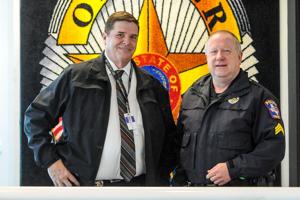
The Allen Police Department Hostage Negotiation Team has received recognition for a different kind of work outside the typical line of duty….
“When people reach a point that they call a suicide line, they’ve usually lost all hope and they feel helpless,” he said. “You build a rapport with them, and you use active listening skills. You’re listening to them more than you’re talking.”
Now, once a month, the hostage negotiation team – Felty, Such, and officers Matt Johnson and Richard Ferguson – heads to the Dallas center to work the suicide hotline. Felty said the officers usually take 15-25 calls per shift, and that the average call lasts 45 minutes.
Read more at starlocalmedia.com [HERE]. 

Saturday, January 17, 2015

Portland Bureau crisis team wins top prize in competition


Congratulations to Portland Police Bureau’s Crisis Negotiation Team  for winning the 25th Annual Crisis Negotiator Competition in Texas.

Read more from the Portland Tribune [HERE]. 

Sunday, January 11, 2015

How to get what you want: top negotiators on the tricks of their trade


Ayesha Vardag (The Divorce Lawyer)-  Emotions can completely derail any sort of sensible compromise. It’s also common for people to fixate on details. I’ve had people fight over furniture, coffee machines, even ski suits. Those items become sticking points, because they are in some way emotive. I advise them to forget about the small stuff and just focus on getting what they want.


Christopher Voss- (The Hostage Negotiator)- I like to define negotiation as emotional intelligence on steroids. The key to success is navigating the other person’s emotions. In a hostage situation, emotions might seem to be larger than normal, but it doesn’t mean they’re any different. I do think introspective people make better negotiators because they think about human dynamics more. They don’t miss what’s going on.
How to handle a difficult situation…


Elizabeth O’Shea- (The Parenting Guru) Pre-negotiate tantrums. The first time, you can’t do a lot about it – you weren’t expecting it. But you need to plan ahead for when it happens again. Talk to them and ask questions.
Read the full article from The Guardian [HERE]. 

Tuesday, January 6, 2015

Crisis Negotiator: The Key to Resolution Is Listening

"Every situation is different and whatever brought a person, or precipitated an event, to where a person felt that they were in crisis is different for everybody," Lt. Bavencoff said. "So we have to listen to find out what that is, to see how we can resolve that situation."


A tense standoff Thursday morning where a father led police on a pursuit with his four children in the car ended with no injuries, thanks to negotiations with police over a cell phone.
A seasoned negotiator with the San Diego Sheriff's Department said the key to diffusing a crisis situation is listening and genuine communication.

Lt. Christina Bavencoff, commander for the department's Crisis Negotiation Team, said the priority is ensuring everyone goes home safely. Thursday afternoon, that was the successful outcome after police took Daniel Perez into custody and rescued his children on a San Diego freeway.

Source: http://www.nbcsandiego.com/news/local/Crisis-Negotiator-The-Key-to-Resolution-is-Listening-285569941.html#ixzz3O5hRolE3 


Thursday, January 1, 2015

CUNY John Jay College & ACR NY Chapter Event: NYPD HOSTAGE NEGOTIATIONS

The Association for Conflict Resolution of Greater New York
and
The CUNY Dispute Resolution Center at John Jay College
Invite everyone to the monthly

NYC-DR Roundtable Breakfast

John Jay College of Criminal Justice
899 Tenth Avenue
Room L61 
[new building lobby]

January 15, 2015
8 am – 10 am
If you would like to attend, please register online by clicking here.

PLEASE NOTE:
THIS IS THE THIRD THURSDAY OF THE MONTH

NYPD HOSTAGE  NEGOTIATIONS  

Lt. Jack Cambria of the NYPD

New York City is the birthplace of police hostage negotiations and home to a special team of officers which responds to those calls where officers encourage parties to talk.  Police hostage negotiators negotiate with the unknown on the scene where parties are emotionally charged and audiences are common.  At this Roundtable, Lieutenant Jack Cambria, the chief hostage negotiator of New York Police Department's Hostage Negotiation Team since 2001 will reflect on the HNT's past and discuss criteria for selecting negotiators, the composition of the team, how police negotiations work, the role of emotions and rationality in hostage negotiations, and how negotiators build rapport under stress.


Lt. Jack Cambria is an active member of the New York City Police Department who has currently contributed 33 years of exemplary service. He served for 16 years in the Emergency Service Unit (ESU), whose primary focus is to provide Rescue, SWAT, and Counter-Terrorism services to the City of New York. He was assigned to ESU in the ranks of Police Officer, Sergeant and Lieutenant, (his current rank).  He has extensive experience and certifications in all facets of these operations, and is a New York State Certified Police Instructor. He has received numerous awards for bravery and dedicated service. He has responded to and served on many high profile assignments such as both World Trade Center disasters, plane crashes, and a variety of hostage and barricade situations, particularly violent and suicidal individuals. He also served as the Rescue Team Manager of the FEMA-Urban Search and Rescue Task Force. Because of his solid foundation of achievements, Jack was assigned to his current position, in command of the agencies elite Hostage Negotiation Team. His current duties consist of coordinating the efforts of over 100 negotiators, who respond throughout New York City to all hostage related assignments. He is responsible for the training and certification of all new negotiators and refresher training of all current members of the team. Jack has conducted in-service training for many International, Federal, State and Local Law Enforcement agencies. In 2006, he and some select members of his team were dispatched to the U.S. Military Base at Guantanamo Bay, Cuba to conduct hostage negotiation training for members of the United States Joint Task Force. He has also served as a technical consultant in the entertainment industry, where he advised on the major motion pictures, ‘The Taking of Pelham 1-2-3,’ ‘Jack Ryan,’ and ‘The Amazing Spider II;’ additionally for the television series, ‘Life on Mars,’ ‘Blue Bloods,’ ‘Unforgettable,’ ‘Elementary,’ and currently, ‘The Mysteries of Laura.’ Jack has authored several scholarly articles on negotiations and earned a Master’s Degree in Criminal Justice from the John Jay College of Criminal Justice in New York City, where he is currently serving as an adjunct professor. 

Monday, December 29, 2014

In This Corner: THE JANUS THEORY – WHAT’S OLD IS NEW AGAIN

By Lynne Kinnucan


The Roman god Janus, responsible for overseeing the beginnings and ends of conflicts, was also the god of transitions. As we transit into 2015, we wanted to look at what we have learned from the insights and practices of negotiators who are experienced in transitions. All of them based their work in authentic listening.

We mentioned active listening in almost every issue last year because, although it is an old practice, it is played out in ways that are always new.  This month’s Corner reviews some of the comments on hostage negotiation techniques and the common root from which they spring. 

Trainer and retired FBI hostage negotiator Derek Gaunt noted that deep listening is a powerful skill, but difficult to master, and he works from day one to get the active listening skills off the page and into his students’ muscle memory. 

He steers them away from one of the biggest mistakes a hostage negotiator can make: using active listening skills like a robot. If a negotiator is thinking only about which skill to use next, the subject may think the negotiator doesn’t care about his problems and … how to put this ….may react badly.  Negotiations have been won and lost over this skill.

Gary Noesner, retired hostage negotiator and author of Stalling for Time, expands on this:  

“The sincere and genuine demonstration of your interest and understanding of the other person's problem/point of view is far more important than your ability to provide a quick solution."  

In fact, the quick solution is often damaging to the process of attunement and resolution.  The listening must come first.

Saturday, December 20, 2014

Building Trust in a Volatile Situation

David Horsager Headshot
 
The recent "Siege in Sydney" provided me with the chance to consider how the Trust Edge illustrates a workable approach even in the most volatile, life-threatening and unpredictable situations. Police and military forces around the world have developed specific protocols for obtaining the safe release of hostages in an increasingly dangerous world. These protocols were born out of the aftermath of the 1972 Olympic hostage crisis in Munich, which tragically ended with the deaths of 9 hostages and one police officer. Wishing to get better results when similar incidents happened in the future, teams of professional negotiators, law enforcement and military personnel have developed a better way of managing these terrible situations...similar in many ways to the Trust Edge.

David then talks about the C's

  • Compassion
  • Connection & Connectivity
  • Commitment
  • Conclusion
I encourage you to read the full article [HERE]. 

Tuesday, December 9, 2014

"Just Shut Up And Listen"


From the NY Times article on Thanksgiving tips on dealing with family issues:

“Just shut up and listen,” said Frederick J. Lanceley, the F.B.I.’s former senior negotiator and former principal director of its negotiation course, when asked how to get two parties who are at odds with each other to cooperate at the holiday dinner table. “People want to be heard. They want the attention.”

Mr. Lanceley said that during his 26 years with the F.B.I., his active listening skills caused perpetrators in various cases to confess, to ask if they could write him from jail or to even offer him a job. Mr. Lanceley advocated the following course of action: 

“Repeating what the other person says, we call that paraphrasing. ‘So what you’re telling me is that the F.B.I. screwed you over by doing this and that,’ and then you repeat back to him what he said. Also, emotional labeling: ‘You sound like you were hurt by that.’ ‘You sound like it must have been really annoying.’ Little verbal encouragements: ‘Unh-huh,’ ‘Mm-hmm.’ A nod of the head to let them know you’re there.”

The article quotes familiar names from the Law Enforcement Crisis/Hostage Negotiation world such as Chris Voss, Gary Noesner, Jennifer Higby, Jennifer Hardwick, Robin Burcell, and Judy Couwels. 

Read the full article [HERE].

Monday, December 1, 2014

A deal's a deal: Former FBI negotiator Chris Voss lands 6-figure deal for 'Killer Deals.'

A former FBI hostage negotiator has a six-figure deal with an imprint of HarperCollins Publishers for a book entitled "Killer Deals."

Read the full (and brief) article from the AP [HERE].

Read more about Chris Voss [HERE]. 

Saturday, November 29, 2014

Western States Hostage Negotiators' Association 29th Annual Training Conference

WSHNA B&W.jpg
PRESS RELEASE

For Immediate Release

The Western States Hostage Negotiators' Association (WSHNA) is excited to announce their 29th Annual Training Conference.

April 28, 2015 to May 1, 2015 at the Hotel Captain Cook, Anchorage Alaska.

Full information at www.wshna.com.
WSHNA is also on Facebook under our full name.

Our web site includes presenter information, hotel link with a special negotiated rate, airfare discounts with Alaska Airlines and on-line registration and payment.

The goal of the association is to develop in members a higher degree of proficiency in the performance of their professional duties. The association shall provide training for members, and the association shall act as a resource and conduit for information sharing.

WSHNA depends upon your involvement as a member to accomplish these goals. WSHNA represents police & corrections crisis negotiators from Alaska, British Columbia, Hawaii, Idaho, Montana, Nevada, Oregon, & Washington.

Monday, November 24, 2014

'It’s OK to be touchy-feely': Officers use empathy, active listening to end standoffs


...Bodine credited the safe resolution of the standoff to Crisis Intervention Team training, a 40-hour program that teaches law enforcement officers tactful ways to interact with and help people who may pose a threat, but are dealing with mental health or substance abuse problems, or are simply having a really bad day.

...In the case of the man standing on the Rims, this meant bringing his mother and girlfriend to the scene. Allowing the man to hug his mother before handcuffing him and putting him in a patrol car was the “deciding factor” in ending the standoff peacefully, according to Keightley.
There are other striking differences between the reality of crisis negotiation and how negotiators are portrayed on the silver screen.

Read more at Billings Gazette: http://billingsgazette.com/news/local/crime-and-courts/it-s-ok-to-be-touchy-feely-officers-use-empathy/article_0335b61b-c3b5-56ca-a4ac-79afa2e110e7.html#ixzz3K1hZ8cSt

Monday, November 17, 2014

President Obama Orders Full Review of Hostage Negotiation Policy


President Obama has ordered a comprehensive review of policy dictating how the U.S. government tries to secure the freedom of Americans held hostage by terrorists abroad, a senior Pentagon official revealed in a recent letter to a member of Congress.
“As a result of the increased frequency of hostage-taking of Americans overseas, and the recognition of the dynamic threat posed by specific terrorist groups, the President recently directed a comprehensive review of the U.S. Government policy on overseas terrorist-related hostage cases, with specific emphasis on examining family engagement, intelligence collection, and diplomatic engagement policies,”...
Read more from ABC News [HERE]. 

Sunday, November 16, 2014

Applying Law Enforcement Crisis Negotiator Intervention Skills To Commercial Mediation


Have a look at this article from Alternatives if you are trying to apply crisis and hostage negotiation skills to your commercial mediation/negotiation practice.

Law enforcement professionals might also find it of value to review your skills as well.

The article covers:

  1. Establishing communication and building rapport
  2. "Buying" time
  3. Defusing emotions
  4. Gathering information to decide on the best negotiation strategy
Download the (pdf) article [HERE].